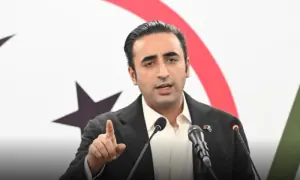
ISLAMABAD: Pakistan People’s Party (PPP) Chairman Bilawal Bhutto Zardari has demanded UN Secretary General Ban Ki-moon to take strong measures to stop the killing of political activists in India-held Kashmir by Indian security forces.
“I wish to draw your attention to the increasing tempo and scale of human rights violation in Kashmir,” Bilawal said in his letter written to Ban Ki-moon on Monday.
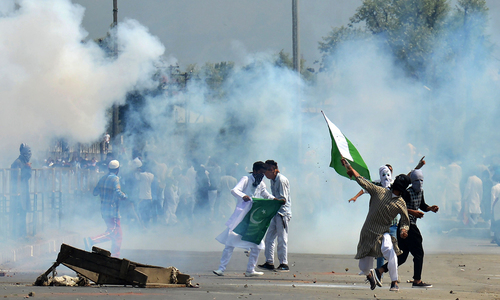
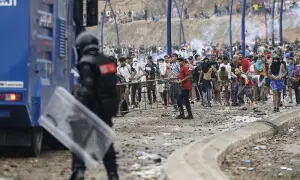
The PPP chairman said the Indian security forces are using disproportionate force and killing the Kashmir’s political activists since July 8.
“During the past few days, over 40 people have been killed and hundreds injured, whose only fault is to demand their right to self-determination guaranteed to them by the United Nation,” Bilawal said.
“I am sure you agree that Kashmir is a dangerous flashpoint in the South Asian region,” he said, adding that over seven hundred thousand Indian troops were stationed in the disputed region for the past six and half decades.
Bilawal said that any conflagration or ramping up of tension also runs the risk of threatening regional peace and stability.
“Pakistan has been in forefront seeking non-military solution to the vexed conflict and seeks your good office in taking note of the egregious violation of the Kashmiri people’s right to self-determination,” he said.
Meanwhile, authorities in Indian-held Kashmir have shut down printing presses and temporarily banned newspapers from publishing in a sweeping information blackout after days of anti-India protests left dozens of people dead in the region.
State government spokesman and Education Minister Nayeem Akhtar said the measures were aimed at saving lives and strengthening peace efforts.
The government says 36 people — 35 civilians and a police officer — have been killed in clashes between protesters and security forces, while local human rights groups and newspapers say at least 40 have died.
A strict curfew was in effect in troubled areas for the ninth straight day Sunday, with hundreds of thousands of people trying to cope with shortages of food and other necessities.
Tens of thousands of Indian government troops patrolled mostly deserted streets in the region, where shops and businesses remained closed.
Since 1989, more than 68,000 people have been killed in the uprising against Indian rule and the subsequent Indian military crackdown.