NEW DELHI: The World Bank (WB) said on Thursday it would lend India more than $1 billion for its huge solar energy programme, after Indian Prime Minister Narendra Modi sought climate change funds from its visiting head.
Modi is banking on India's 300 days a year of sunshine to generate power and help fight climate change rather than committing to emission cuts like China.
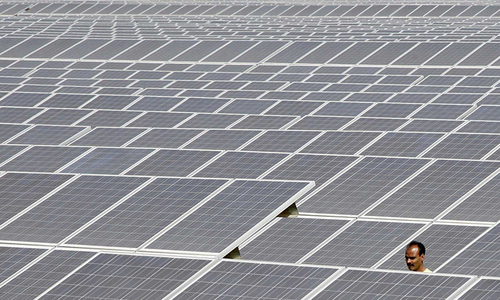
The WB loan is the global lender's biggest solar aid for any country and comes as India has set a goal of raising its solar capacity nearly 30 times to 100 gigawatts by 2020 and is attracting mega investment proposals from top companies and institutions.
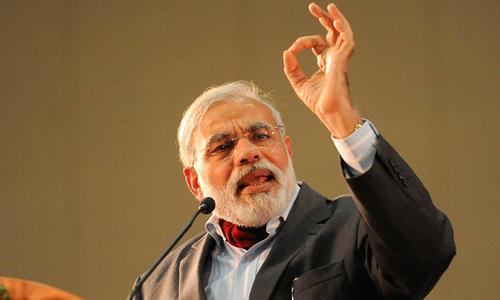
"Prime Minister Modi's personal commitment toward renewable energy, particularly solar, is the driving force behind these investments," WB President Jim Yong Kim said in a statement released after he met Modi.
"The World Bank Group will do all it can to help India meet its ambitious targets, especially around scaling up solar energy."
India is the largest client of the WB, which lent it around $4.8bn between 2015 and 2016.
Modi's office said he told Kim about the need for climate change financing for countries like India that are "consciously choosing to follow an environmentally sustainable path".
India wants the share of non-fossil fuel in total installed power capacity to jump to 40 per cent by 2030 from 30pc currently, but there are challenges including weak finances of state distribution companies forced to sell subsidised power, difficulties hooking up solar projects to grids, and access to affordable capital.
Still India reckons its renewable energy industry could generate business opportunities worth $160bn this decade, making it a lucrative market that has already attracted big global players such as Japan's Softbank Corp, Taiwan's Foxconn, First Solar, Trina Solar Ltd and Finland's state-controlled utility Fortum Oyj.
German development bank KFW has already agreed to offer India low-interest loans of around 1bn euro over the next five years to fund roof-mounted solar panels, and the construction of solar energy farms and self-contained solar power facilities not connected to the grid.