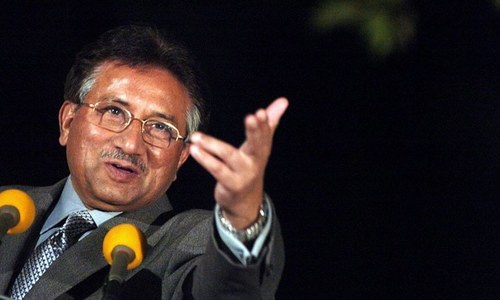
ISLAMABAD: The government is trying to ‘cool down’ the infuriated opposition by assuring it of bringing back former president retired General Pervez Musharraf from abroad through Interpol.
It, however, may not be easy because in the past Interpol had rejected Pakistan’s requests for handing over the former dictator.
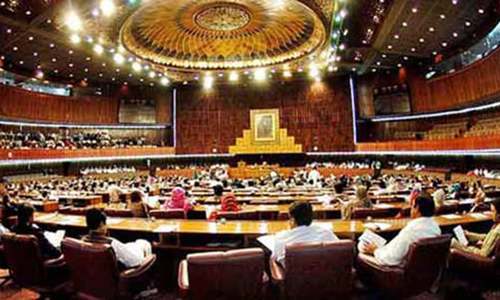
The government allowed Mr Musharraf last week to proceed abroad for ‘medical treatment’. During a joint sitting of parliament on March 21, the opposition criticised the government for allowing the retired general to go abroad.
Responding to criticism, Interior Minister Chaudhry Nisar Ali Khan said the former president would be brought back to the country through Interpol if the Supreme Court or any other court ordered the government to do that.
Interpol has rejected Pakistan’s requests for handing over the former general in the past
In 2011 and 2012, when Mr Musharraf was abroad, the government requested Interpol at least three times to issue his red warrants, but the requests were rejected because, according to Interpol, the FIA had not provided ‘sufficient evidence’.
The former president was nominated in the murder case of former prime minister Benazir Bhutto in 2010. An anti-terrorism court issued his arrest warrants in 2011.
Explaining the procedure, an FIA official has been reported as saying the government, through a local representative of Interpol, sends a request to its head office in France. Interpol examines the request along with the evidence and then issues red warrants for a wanted person. After that it becomes imperative for all member states to arrest the person in question and to hand him/her over to the country seeking his custody.
Mohammad Azhar Chaudhry, the special prosecutor in the Benazir Bhutto murder case, told Dawn that the FIA had approached Interpol through the anti-terrorism court.
He said Mr Musharraf might come back on his own because on several occasions he had stated that he would face cases pending in courts.
Barrister Farogh Nasim, lead counsel of Mr Musharraf, said neither the former president nor his counsel had ever given any undertaking about his return. He said it was not a political issue. The special court seized with the high treason case had allowed Mr Musharraf to proceed abroad for medical treatment on March 31, 2014, but it was the federal government that kept a sick man waiting for two years.
Mr Musharraf is facing the high treason case in the special court, Benazir murder case, the judges’ detention case and the murder of Lal Masjid cleric case.
Published in Dawn, March 24th, 2016