ISLAMABAD: The National Command Authority on Wednesday stated that nuclear deterrence is a factor of stability in South Asia and expressed its resolve to maintain full spectrum deterrence, in line with the policy of credible minimum deterrence.
Ahead of the upcoming nuclear security summit to be held next month in the US, Pakistan has ratified the Convention on Physical Protection of Nuclear Material (Amended).
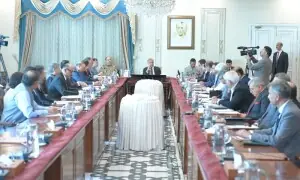
The approval in this regard was given by the premier, who is the chairman of the NCA.
“As a responsible nuclear state, Pakistan would continue to contribute meaningfully towards the global efforts to improve nuclear security and nuclear non-proliferation measures,” said a statement released by the NCA.
The NCA also comprehensively reviewed the safety and security mechanism of Pakistan’s nuclear programme and expressed satisfaction on the measures in-place to ensure highly effective security of nuclear assets.
The participants of the meeting also reposed full confidence in the command and control system of the national strategic arsenal and appreciated the high-level of preparedness of the strategic forces.
While taking note of the growing conventional and strategic weapons’ development in the region, the NCA expressed serious concerns over the adverse ramifications for peace and security on this account.
NCA reiterated its determination to take all possible measures to make national security robust; enabling it to effectively respond to the threats to national security without indulging in arms race.
The meeting's participants noted with satisfaction that Pakistan has the requisite credentials that entitle it to become part of all multi-lateral export control regimes, including the Nuclear Suppliers Group (NSG), for which Pakistan seeks adoption of a non-discriminatory approach.
The meeting was attended by the top military and civil leadership of Pakistan.
In previous meetings, NCA has noted with concern India’s rapidly expanding conventional military asymmetry and dangerous limited conventional war policy called Cold Start doctrine.
Relations between Pakistan and India have been on a steep downslide since the Bharatiya Janata Party government came into power in New Delhi last year.
The bilateral dialogue on disputes has been suspended since January 2013, while escalating skirmishes along the Kashmir Line of Control and Working Boundary have fuelled tensions.