ISLAMABAD: The use of tobacco is not allowed in Islam and the federal government is taking steps to control its use, including legislation and will be making efforts to control the increase in tobacco advertising, promotion and sponsorship.
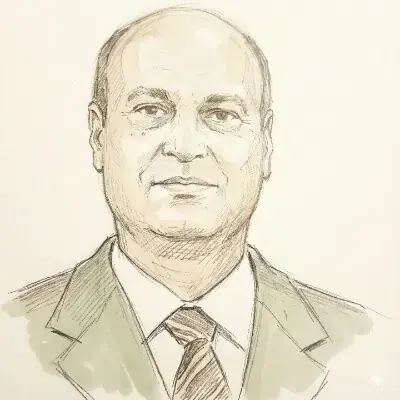
This was said by Federal Minister for Religious Affairs Sardar Mohammad Yousuf at a workshop arranged by The Network for Consumer Protection on Tuesday. He said people should stop smoking and that the media should play an active role in making that happen.
Executive Coordinator of The Network, Nadeem Iqbal, said since the devolution of powers to the provinces, a controversy had risen about whether health was in the jurisdiction of the provinces or of the federal government.
“The Constitution, as it is today, is very clear. Only the federal government is allowed to introduce legislation on tobacco control. In the federal legislative list Part 1, the federal government has the exclusive legislative authority on subjects related to international treaties, conventions, agreements and international arbitration,” he explained.
Religious affairs minister says government is making efforts, including legislation, to control increase in tobacco advertising
“Pakistan ratified an international convention called the Framework Convention on Tobacco Control in 2005. But now the federal health ministry is shying away from fulfilling its commitment under the convention under one excuse or another,” he continued.
Talking about the last budget speech in June 2015, Mr Iqbal said though Finance Minister Ishaq Dar had claimed that the federal excise duty (FED) on cigarettes would be increased from 58pc to 63pc, an analysis of the new cigarette prices has shown that FED was not more than 56pc.
Director News PTV Athar Farooq Buttar said string operations such as ones carried out in other countries on shops selling tobacco to minors should be introduced in Pakistan.
The use of tobacco has increased worldwide, especially in developing countries like Pakistan. According to some reports, if steps are not taken to curb the use of tobacco, it could be the cause of eight million deaths every year across the world by 2030.
In a country like Pakistan, where even health issues are discussed in reference to religion, donor organisations like the World Health Organisation (WHO) are increasingly involving religious scholars to help in raising awareness about various health issues.
Similarly, population programmes and organisations working towards controlling the ever increasing population involve religious scholars from time to time to convince people to use contraception.
WHO and other donor agencies have used scholars from Saudi Arabia and Egypt in their anti-polio campaigns.
Talking to Dawn about the trend, activist Farzana Bari said it was wrong to discuss health in relation with religion.
“Pakistan is a modern, democratic state and has to be run according to its laws. We have not established an institution like the Al-Azhar University, which means that those who speak of health issues from a religious point of view are not qualified to do so,” she said.
“At the same time, these scholars present such a narrow-minded logic that they become a matter of embarrassment, like what the Council of Islamic Ideology does,” she added.
Published in Dawn, February 17th, 2016