107
107

Update: Feb 16, 2016 – In the Bloomberg report, calculations of Pakistan's total foreign debt ($120bn) and total budget for 2015-16 ($13tr) are incorrect due to which their assertions are questionable.
Despite improvement in the country's security situation and the economy growing at an eight-year high, Pakistan risks default as 42 percent of its foreign debt, around $50 billion, is due in 2016, reports Bloomberg.
Around $30 billion is due between July and September, of which $8.3 billion will need to be in foreign currency, depleting 40pc of the nation’s $21 billion in foreign-exchange holdings. But a major part of the debt due is in local currency, which leaves the government with room to introduce more short-term instruments to leverage its current liabilities.
“Pakistan’s high level of public debt, with a large portion financed through short-term instruments, does make the sovereign’s ability to meet their financing needs more sensitive to market conditions,” Mervyn Tang, lead analyst for Pakistan at Fitch Ratings Ltd., told Bloomberg.
In 2013, a $6.6 billion loan from the International Monetary Fund (IMF) was used to make payments for previous outstanding loans and avoid a Greece-like crisis. Since then, the projected debt due by end-2016 has grown by 79pc.
At Rs13 trillion ($124 billion), 77 pc of the budget is already allocated for loan repayments this year.
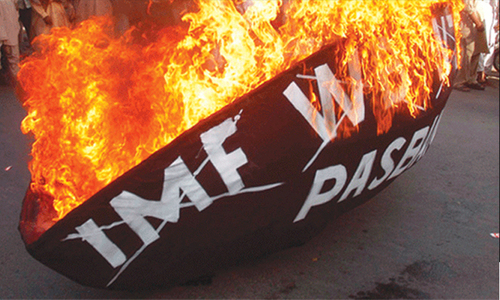
A concurrent challenge is meeting IMF demands to privatise state-owned concerns, as witnessed by the strike at Pakistan International Airlines, which ended only last week.
November 2015 saw new taxes worth Rs40 billion to meet the fiscal deficit.
Read more: Rs40bn additional tax measures soon to meet fiscal deficit: IMF
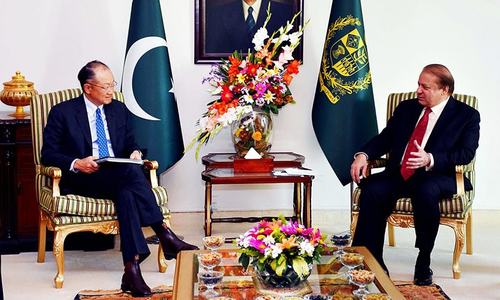
In a Feb 1 statement, the Finance Ministry emphasised that Pakistan is committed to successfully implementing its IMF macroeconomic stability program, while the IMF is confident; mission chief Harald Finger said there is a “quite good” chance of implementing the guidelines provided.
Despite the grim outlook, experts are optimistic. According to Fitch’s Tang, Pakistan’s external liabilities are “relatively modest,” foreign-currency reserves have risen, the IMF is ready to help meet maturing loans and Chinese investment in an economic corridor is on its way.
“Improving growth prospects, lower inflation and smaller budget deficit should help to underpin investor confidence, particularly the domestic investor base,” Tang said.
Other risks include further capital flight and currency outflows, as well as devaluation of the rupee and fluctuations in the exchange rate. According to the IMF, the rupee is already overvalued at the current rate by as much as 20pc.
Mustafa Pasha, head of investments at Lakson Investments Ltd, which manages $200 million of stocks and bonds, told Bloomberg investors should expect volatility in bonds and pressure on the rupee this year.
Although the decrease in oil prices has helped, the future remains unclear.