RAWALPINDI: Admitting that work on the implementation of the National Action Plan (NAP) to counter terrorism has been slow, the Punjab government has asked local police and administrations to involve parliamentarians in counter terrorism efforts.
The Punjab government, which has hitherto been proudly announcing progress on NAP through regular press releases, has acknowledged in a letter that it has observed only “slight satisfaction” over the implementation of the new laws promulgated to curb terrorism.
The letter, which was sent to district administrations and divisional police chiefs across the province, said that civilian law enforcement agencies were not fully active in their efforts to counter terrorism.
Police chiefs, district administrators told to involve lawmakers in counterterrorism efforts
“Pace of actions under NAP appear to have been slow,” said the directive.
In the letter, the home department has suggested that divisional police chiefs and commissioners seek help from local MNAs and MPAs and sensitise them about their role in the implementation of the 20-point NAP.
The Punjab government claims to have registered as many as 47,123 cases under new anti-terror laws, promulgated after NAP, and that 51,493 people had been arrested so far. At least 4,376 individuals had been convicted, 609 had been acquitted and 34,075 cases were still pending.
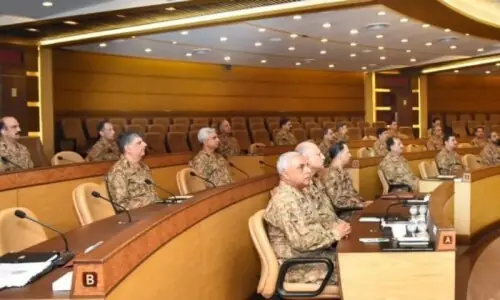
This echoes the concern, expressed by the military, over progress on NAP implementation. In a statement issued after Tuesday’s corps commanders’ conference, the army warned that its efforts to counter terrorism could be affected due to inadequate support by civilian agencies.
A senior security official told Dawn that progress on madressah reforms and their sources of financing, specifically, had been miserably slow.
Checking foreign funding for madressahs was proving to be an uphill task for the government as there was no mechanism available to law enforcement agencies to do so.
Under NAP, sources of terror financing are to be blocked and banned outfits are to be stopped from operating under new names.
The lack of progress in investigations into terrorist attacks has been another cause for concern for the government and many terrorism-related cases shifted by the district police to the Counterterrorism Department are still pending.
There are at least 27 such cases, including the suicide bombing in R.A. Bazaar, attacks on imambargahs in Gracy Lines, Sadiqabad and Chittian Hattian, as well as the assassination of Shuja Khanzada.
In addition, the government has yet to devise a mechanism to register religious seminaries, although security agencies believe that the government had been successful in implementing a ban on the misuse of loud speakers, and checking the proliferation hate material and sectarianism.
Published in Dawn, November 12th, 2015
On a mobile phone? Get the Dawn Mobile App: Apple Store | Google Play