WHEN a farmer himself throws away milk or burns corn, it is an indication that things are going from bad to worse for him.
Seen in this context, the prime minister’s kissan package is a good start towards solving the problems of the rural community. But this initiative needs to be made more purposeful and result-oriented.
Since agriculture is the initiator of the country’s economic activity, a large number of business groups — like arthis; sellers of seeds, fertilisers and insecticides; and commission agents of fruit and vegetable markets — are associated with the farmers.
The role of all these affiliates is exploitative because a sizable part of the proceeds from crops and produce is taken by these market brokers in the shape of various commissions and discounts. The situation is more pronounced in case of small farmers as compared to the big landlords.
There is no institutional platform to solve such problems faced by small farmers as the representatives of agricultural chambers and growers associations largely comprise rural elites having political clout.
The government allows the establishment of a chamber for small and medium enterprises (SMEs) at the district level. A similar initiative is required for agriculture to enable small farmers to focus on the problems that they themselves are facing.
At the district level, agricultural departments are in place to provide advisory and extension services to the farmers under the control of district coordination officers (DCO) but there is little interaction with small farmers. At the time of sowing, the farmers do not have easy access to certified quality seeds. After sowing, the availability of genuine fertiliser and pesticide is not assured.
And in case of any attack by a disease or a pest, the poor farmer is entirely on his own owing to his lack of access to sound advice from an agricultural scientist.
After the harvesting of the crop, the input providers happily count their fat profits whereas the farmers worry about getting a better return for their produce. The plight of sugarcane growers is now well known.
In the case of milk, the situation is not much different. After paying around Rs50 per litre to farmers, the milk processing companies are charging well over Rs100 per litre from the general consumers.
Rice growers have also been crying due to heavy losses for the last two years, but the retail price of basmati rice is more than Rs100 per kg.
There is a need to make agricultural departments functional under the proactive leadership of DCOs. A DCO should be given targets for the promotion of agriculture and livestock in his area. The performance of DCOs must be linked with the fostering of a favourable environment in their districts for the farming community and their achievements may be acknowledged.
Another dark area for farmers relates to the behaviour of banks as agricultural finance is considered cumbersome and small farmers treated as sub-prime borrowers. The highest lending rates are charged from the farmers. It is sheer injustice that the exporters get export finance below 5pc, while the farmers — the backbone of the economy — pay more than 15pc for bank credit.
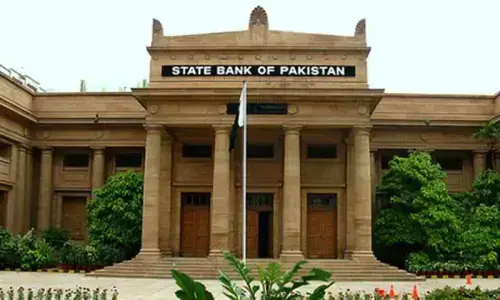
Since the banks mobilise low-cost deposits at 3-5pc from rural depositors, the lending rate on rural credit should not exceed 9-10pc. At a time when farmers are getting desperate, the SBP needs to rationalise the cost of agricultural credit.
The kissan package is largely quantitative in nature, aiming at certain subsidies and cuts in the prices of inputs.
We are now living in a different environment. A great deal of awareness has taken root among the farmers. The local body system is soon coming where each district will be a unit of governance.
It is the appropriate time to make agricultural upliftment a high priority for the coming district governments under the leadership of district nazims and DCOs. For this, very little administrative and legislative initiatives — but a strong political will — will be required.
If the kissan package is implemented in a half-hearted way, agriculture in particular and the economy in general will be badly hurt.
The writer is President, Institute of Banking and Business Learning.
Published in Dawn, Business & Finance weekly, November 2nd, 2015
On a mobile phone? Get the Dawn Mobile App: Apple Store | Google Play