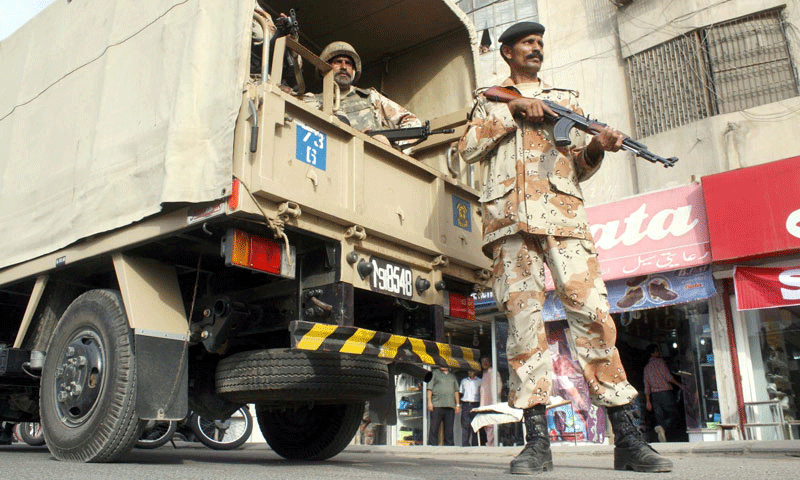


ISLAMABAD: The National Assembly’s Standing Committee on Petroleum and Natural Resources was informed on Tuesday that the Rangers had arrested the deputy managing director of the Sui Southern Gas Company in Karachi for his alleged involvement in funding militant groups.
A meeting presided over by the committee’s chairman, Bilal Ahmed Virk, was told that three other officials of the company, including the chief financial officer, senior general manger and general manger (projects) were also under Rangers’ custody.
Also read: COO of Sui Southern Gas Company in Rangers custody for 90 days
“I have talked to the Rangers director general and assured him of full cooperation in the investigation against SSGC officials. I was told that Shoaib Warsi is accused of financing militant groups,” Mr Virk said.
SSGC Managing Director Khalid Rehman informed the committee that Shoaib Warsi was detained by Rangers personnel on August 26 when he was leaving his office.
“Fearing action by the Rangers, another eight senior officials have gone underground and now I am the only senior manager left in the company,” Mr Rehman said.
He declined to name the militant group or share with members of the committee details of alleged links of Shoaib Warsi with the group.
Petroleum Minister Shahid Khaqan Abbasi informed the committee that a ban was imposed on new commercial and industrial gas connections in 2011 because there was a severe gas shortage in Punjab.
“But now we are planning to move the Council of Common Interests to get the ban lifted because thousands of applications for gas connections are pending with the Sui Northern Gas Pipelines Limited. It is a constitutional right of every Pakistani to have access to gas,” he said.
The minister said the previous government had agreed that the province producing the natural resource had the first right over it, but there were certain fallouts.
The committee was informed that domestic consumers were not getting gas in Punjab, but a large number of industrial units were using gas for power generation because it was cheaper than electricity produced by furnace oil.
The committee discussed the issue of massive gas theft in Karak area and SNGPL officials said that there was an illegal network of 1,600km pipeline in the area.
The DIG Police, Khyber Pakhtunkhwa, said 139 cases had been registered in Kohat and Karak on complaints of SNGPL, but the court dismissed 22 of them because the company did not pursue them.
The meeting was informed that 1,800 new applications had been received in the Karak area, but no-one was ready to deposit the required fee.
Member of the committee and former chief minister of KP, Akram Durrani, said the provincial government had collected Rs27 billion from Kohat, Karak and Hangu as gas royalty, but it did not want to invest Rs3bn to lay pipelines in the areas.
The chairman of the committee decided that the matter would be taken up with the KP chief minister in the next meeting.
Published in Dawn, September 2nd, 2015
On a mobile phone? Get the Dawn Mobile App: Apple Store | Google Play