1
1


We often hear that Pakistanis are amongst the most prolific donors to charity organisations and causes. Our society is seldom short of people who are always more than willing to lend a helping hand. This same generosity is also seen in people when giving free advice which is not only free of cost but can also be free of credible information, responsibility and background knowledge.
This applies specially to medicines, treatments and home remedies. Following an acquaintance’s advice about where to shop, which brand to buy or how to efficiently manage your workplace, etc., maybe worth a try but when we follow or believe information coming from under- or ill-informed sources about medicines and medical conditions, then it can lead to many undesirable and even life threatening repercussions.
First of all it is absolutely NOT OK to take a medicine that might have helped your uncle, brother or friend for a problem that you have self-diagnosed yourself with or even if a doctor has diagnosed it. Diseases with similar presentation signs can differ greatly in their pathology and treatment options.
Even a single disease might need different medicines for different stages and severity. Self-medication can not only lead to aggravation of your current illness but can also lead to other ailments and complications.
 |
There are thousands of medicines registered in Pakistan. Many of these medicines come with very similar names but entirely different chemical compositions. For the common man it is very much possible to make a mistake in their names. Always make sure you buy medicines from a written prescription.
Some drugs can enhance or diminish the effects of other drugs thereby needing dose adjustments which only a qualified doctor can advise upon. There is also the issue of teratogenic (related to or causing malformations of an embryo or foetus) effects of some medicines that can lead to foetal abnormalities and even in-utero death during pregnancy and serious harm to the mother-to-be. Some of these drugs even persist in the body from weeks to years after stopping consumption of the medicine. Only a qualified doctor can guide you regarding these side-effects and drug intake precautions.
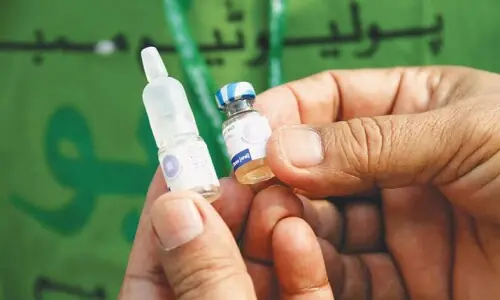
Taking medicine recommended by a non-medical practitioner or on your own understanding can lead to serious side-effects
Do not overdose on prescribed medication in an effort to get speedy recovery. Medicines are processed through the liver and / or kidneys. Overloading these organs beyond their capacity can lead to their damage and even organ failure. Always stick to the dose advised by your doctor. Some medicines can take a long time for their effects to be noticeable; therefore, it is advisable to discuss with your doctor about expected or usual treatment durations if you are unsatisfied with your progress.
The person at the medical store is neither qualified nor experienced enough in diseases and their management to prescribe you medicines. They can offer you medicines which may be harmful to you as they are unaware of your medical history and physical condition. Some will also try to sell you alternative brands or medicine with similar names as it may earn them more profit. Always stick to what your doctor has prescribed you and consult him / her before using any alternative.
 |
Majority of self medication, in Pakistan, is done for fever, flu, pain and skin problems. While these may initially seem to be run of the mill complaints, they can easily be initial signs of more serious problems ignoring which could lead to severe complications.
Topical application medicines can be as dangerous and harmful as oral medicines if used inappropriately or unnecessarily. Adverse reactions from topical medicines or home remedies can lead to skin irritation, pigmentation, acneiform eruptions and even severe infection and permanent scarring.
Sometimes physicians can also be part of the problem, by over prescribing medicines or not educating the patient properly about the side effects and risks of the prescribed medicine. Care should be taken about dosage quantity and treatment duration. Extra caution needs to be exercised when prescribing medicines to children as their metabolism and excretion mechanisms of the body are still in the developing phase. Again a qualified, registered and well-reputed physician is the best bet for patients to avoid over or under-dosing.
All medicines in the house should be kept in a clearly marked container away from the reach of children. Children should never be allowed to handle medicines. Even when giving medicine to children, adult supervision is a must.
The human body is a complex system and needs expert handling and management. Always seek a doctor’s help when suffering from an ailment sooner rather than later. After all, a stitch in time saves nine.
The writer is a consultant Dermatologist and Cosmetologist and Life Member, Pakistan Association of Dermatologists
Published in Dawn, Sunday Magazine, August 9th, 2015
On a mobile phone? Get the Dawn Mobile App: Apple Store | Google Play