0
0

THE Senate Standing Committee on National Food Security and Research had approved the Seed (Amendment) Bill 2014 last month. And there are reports that the Senate will be meeting shortly to pass it.
However, is it constitutionally possible that the Seed (Amendment) Bill 2014 can be enacted? According to Sindh Secretariat’s legislation director, no resolution from the Sindh Assembly has been passed that would allow the proposed bill to be amended by the National Assembly. As far as it is known, Khyber Pakhtunkwa, Punjab and Balochistan have also not passed any such resolution.
Since the 18th amendment, agriculture has been a provincial subject. It is clear that without such resolutions from the four provincial assemblies, the Seed (Amendment) Bill 2014 cannot be passed by the National Assembly. If the bill is passed, it will be open to legal challenges.
For the activists who are opposing the proposed bill, the future course of action will be to challenge the bill through the legislative process. Another pending bill concerns plant breeders’ rights. In Pakistan, the crux of the new seed legislation is basically to grant intellectual property protection to plant breeders and allow the introduction of genetically engineered (GE) varieties.
Critiques against the pending legislations range from the seed being considered ‘private property’ of the intellectual property right holders to the hazardous impact and environmental pollution from genetically modified plants and animals.
The pro-GMO lobby, which mostly springs from US-trained research institutions, has also provided many reasons for the legal recognition of genetically engineered (GE) seeds and crops. These will, of course, in time also include GE animals.
The crux of the new seed legislation is basically to grant intellectual property protection to plant breeders and to allow the introduction of genetically engineered varieties
Academic institutions and the private sector, especially the agro-chemical and the biotechnology sectors, have consistently claimed that GM technologies are needed to meet the food needs of the rapidly growing global population.
According to them, genetic engineering will also be able to address malnutrition and micronutrient deficiencies. And of course, the privatisation debate consistently promises prosperity and profits by the adoption of not only genetic engineering but all corporate agriculture interventions, including GE technologies and automated devices for higher productivity and for fighting climate change.
All of these claims are consistently challenged by environmentalists, development activists, scientists, and most importantly, small and landless farmers.
For those who oppose privatisation and free-market economies, the critical problem is not of science but the capitalist paradigm that is pushing all inventions and innovations for the sake of profit-accumulation.
Science for knowledge and science in the service of the people are not the beacons that are held in our universities or other seats of learning. Therefore, for such a lobby, it is difficult to believe the ‘prosperity’ mantra that the mainstream universities and academia are articulating.
The scepticism is valid when considering the debacle of the green revolution policies in the 1960s, the ensuing pauperisation of small and landless farmers worldwide, and its debilitating impact on the environment, loss of fertility of agricultural land, widespread extinction of animal and plant species, and rising hunger and disease.
The highly expensive agriculture technologies only push the small and marginalised producers more into debt, even though they are often orchestrated for their ability to bring prosperity to the poor. For this, the government policies are often ‘tuned’ to meet the demands of transnational corporations that will earn millions of dollars from capturing new agriculture markets.
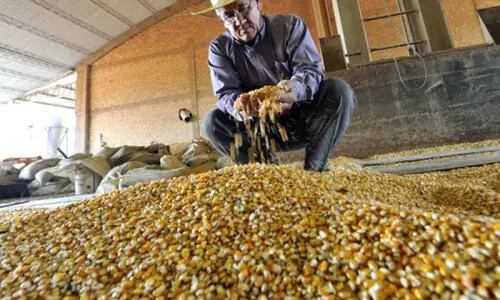
For instance, a US Department of Agriculture supported institution — Information Systems for Biotechnology — recently published research on GM beta-carotene-enriched corn for poultry feed. For farmers in Pakistan, such feed, whether efficacious or not, is far too expensive and ends up only in decreasing their incomes.
Farmers in Pakistan and other agrarian economies are contesting GM technologies on various grounds.
First, the seeds come from genetic material that is the collective property of farmers across the world. Corporations have no right to access and use the genetic material that is not theirs.
Second, these technologies are extremely dangerous to the environment. Genetic science, especially in agriculture, is a major source of environmental pollution which could jeopardise many ecosystems that are critical for maintaining life on our beleaguered planet.
Third, these technologies are and will only further increase the pauperisation of our small and landless farmers. The reasons are the very high cost of production and privatisation, as well as the deregulation and trade liberalisation policies that are being pushed on millions of farming communities across the world.
The writer is a social activist working with small and landless farmers
Published in Dawn, Economic & Business ,July 13th, 2015
On a mobile phone? Get the Dawn Mobile App: Apple Store | Google Play