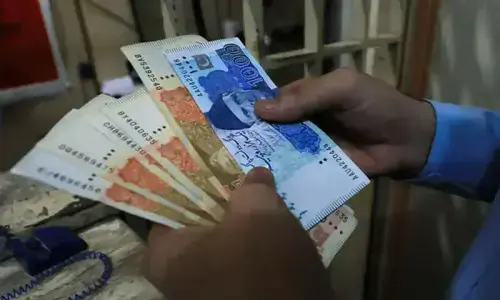
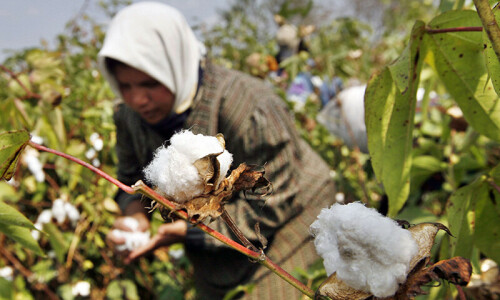
THEY take to the streets for the independence of Judiciary. They take to the streets for ending financial corruption … for ending political victimisation … against sectarian persecution … against military operation … for anything … against anything … but never on economic issues. They, the people of Pakistan, are apparently least bothered about something that affects their everyday life, and does so directly and in tangible terms. Can there be some rational reason for something so strange?
People from various shades of middle class cite their own reasons behind the phenomenon. Dr Mirza Ali Azhar, a senior anaesthetist who heads the Pakistan Medical Association (PMA), believes it is so because, contrary to general perception, the nation is not just a victim of price escalation. “Each one of us also happens to be a beneficiary,” he says, arguing that everyone has the liberty to pass on the effect to the next man in line. “From barbers and traders to doctors and designers, they all raise their price tags and that means more profits,” he says.
Haroon Khalid Akhtar, a senior banker, lays the blame at the door of political leadership. “Because of illiteracy and low level of national pride that breeds indifference, Pakistanis only venture out on the call of a leader. It is the leader’s charisma backed by party structure that together get the people out. Besides, religion has and will always have the capacity to draw people out emotionally on the street so that is no surprise.
“Conversely, take the example of Peshawar school massacre. No leader mobilised rallies on such a grave issue, while nearly a million came out, including world leaders, to protest against Charlie Hebdo killings of mere 11. Even the dying Thar has not protested against serious and unacceptable level of official neglect. All this just goes to show how leader-dependent we have become as a nation,” he says.
The argument is supported in part by Dr Syed Shah Talha Iqbal, who also points out that both leadership and masses alike stand desensitised as there have always been people without the means to earn a decent living.
“Trade unionism and political activism was a reality in the days when people had their backs to the wall and mere survival was at stake. In today’s world, there is just about enough to survive and enough of an opportunity to keep hoping and working around that hope. But taking to the street disturbs the process of ‘working around that hope’ as it entails lost hours and lost earnings,” says the family physician who loves to have his fingers on the pulse of the nation as much as on that of his patients.
Haya Fatima Iqbal, a young freelance filmmaker, views the phenomenon in a largely socio-cultural frame. “The white collar middle class value system does not allow people to openly come out and say they don’t have the financial means for this or that. They will earn on the side, bite more than they may possibly chew, and they will work all the way to their graves without conceding that they have financial backlog.
“Since we happen to be a largely patriarchal society where man is supposed to be the bread-earner, it also hurts his sense of masculinity. He doesn’t even discuss his travails with his family, what to talk of going public with them,” she says.
But what about those who throng to political sit-ins and dharnas, as they are now popularly called?
“Well, who doesn’t know that the dharnas themselves represent an economic opportunity — a massive economic opportunity both at individual and commercial levels,” says Haya with a twinkle in her eyes.
Published in Dawn March 22nd , 2015