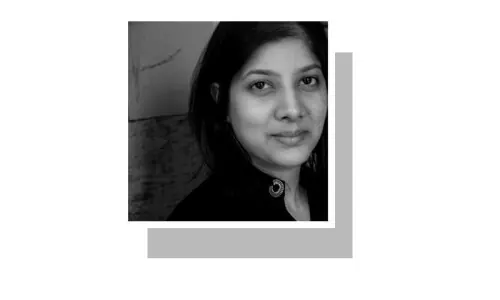
Witha four-year degree in medicinal chemistry from Bryn Mawr College — an all-women liberal arts college in Philadelphia — and a background in lab research on anti-cancer drugs, Eesha Sheikh holds the top operational position of chief technical officer in her father’s sugar factory.
Indeed, few women, if any, can boast of holding a similar job in any industry in Pakistan.
The switch from medicinal chemistry to business has been easy for Eesha. If classroom chemistry lessons enabled her to think logically and evaluate things critically, her research work taught her to never give up on her dreams, no matter what the odds.
“These are precisely the qualities you require to succeed in business,” Eesha noted during an interview with Dawn as she narrated how she had to initially ‘struggle in the lab’ despite being one of the top students in her chemistry class.
“The knowledge and skills I acquired in my chemistry class and laboratories are helping me in my new job at the factory. Most people underestimate the importance of the ability to think logically and evaluate critically in business. To me, these are the most important skills that you need to run and grow your business,” the CTO of Colony Sugar Mills said.
The role of women worldwide has undergone a dramatic change over time, as women now share the spotlight with men in almost every field. Women are leading heavy industries like auto, defense, technology and energy companies the world over. Even in Pakistan, they are pushing through difficult conditions to create their place in business.
But their progress in business, especially in heavy industry, is being hampered by strong gender stereotypes and cultural values that impede their access to capital, training and technology needed to start and grow their operation. Thus, most women-owned businesses in Pakistan continue to be home-based, often classified as being part of the ‘cottage industry,’ with limited staff and revenues.
Women’s progress is being hampered by strong gender stereotypes and cultural values that impede their access to capital, training and technology needed to start and grow their operation. Thus, most women-owned businesses in Pakistan continue to be home-based, often classified as being part of ‘cottage industry,’ with limited staff and revenues
Some studies estimate that women entrepreneurs account for less than 1pc of their population in the country, with most managing micro or cottage businesses in traditional sectors like textiles and apparel, education, beauty salons etc. Few ‘privileged’ women have been able to start and expand their businesses outside their local markets.
“I am fortunate to have a very supportive father who doesn’t distinguish between her daughters and son. He has spent a fortune on my education and does not want me to throw my life away. He has helped me learn my new job, run the factory and plan for business diversification, modernisation and corporatisation in line with changing global trends to stimulate growth,” Eesha mused.
However, the expansion and modernisation of her family business isn’t the only dream she has. “I want to do something to encourage women to get out of their comfort zones and venture outside the cottage industry into the mainstream industry. The exclusion of more than half of the country’s population from mainstream economic activity is not helping us. We must encourage this half of our population to participate in economic activities, and we also need to recognise their work and pay them for it.
“Our women must also realise that marriage and children are just part of their lives and not the end of their lives as they are being taught by society. They have the potential to do much more than gossiping or opening up boutiques. But then, they will have to break their image of subservient and weak creatures.”
She pointed out that the women are taking up top jobs in companies across South Asia, as evident from the rise in ‘women-only’ networking events.
“Why cannot this also happen in Pakistan? Why can’t our men see women advance and grow in business? Why are working women looked down upon here? We, as a society, need to mull over the issues that hamper the development of women entrepreneurs and that are keeping half of our workforce out of the economic mainstream if we want to develop and catch up with the developed world.”
Eesha is already collaborating with some other influential female entrepreneurs in the country to create a platform to encourage and help other potential women entrepreneurs and to link them with their counterparts in other South Asian countries as well.
“It will not be an easy job to bring about the change; it will take some time — maybe a couple of decades. But my struggle in the chemistry labs has taught me that you are bound to succeed if you don’t give up. And I’m not giving up.”
Published in Dawn, Economic & Business, March 2nd , 2015
On a mobile phone? Get the Dawn Mobile App: Apple Store | Google Play