0
0
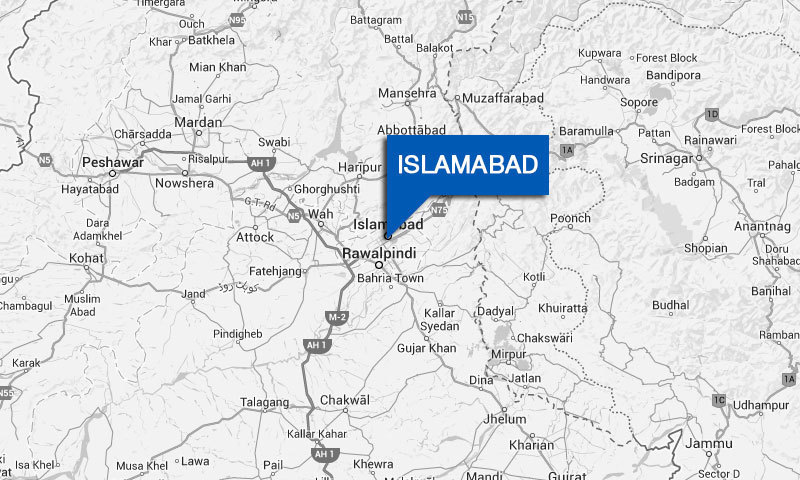

ISLAMABAD: Despite being a signatory to the International Telecommunication Union’s (ITU) Geneva treaty of 2006 — that envisions a complete switchover from analog to all-digital services for audio and video broadcasts worldwide — Pakistan remains the only South Asian country, apart from Afghanistan, which has not even set a timeline for the digital switchover.
This was revealed on Wednesday at the launch of ‘Broadcast Journalism in Pakistan: A Hostage to Media Economics’, a study conducted by media development specialist Asad Baig and investigative journalist Umar Cheema for the Centre for Peace and Development Initiatives (CPDI).
“Pakistan is liable to switch 100 per cent of its broadcast transmission from analog to digital by June 2015 – however, there is hardly any progress,” says the report, outlining the dismal state of the digital broadcast industry.
In contrast, according to the ITU’s official website, India is all set to go all-digital this year, while Bangladesh will be following suit next year. Both Sri Lanka and Nepal are slated to switchover by 2017 and Bhutan expects to complete the switchover by 2020.
New report explores pitfalls of local ratings system, cable operators’ stranglehold on distribution
According to Mr Baig, the Pakistan Electronic Media Regulatory Authority (Pemra) had set Dec 2015 as a tentative deadline for the switchover, but there seemed to be no supporting plans for implementation and it is unlikely that “a country of approximately 140 million television viewers, with approximately 15 million cable connections” could switch technologies in less than a year.
Digital broadcasting services, or direct-to-home (DTH) as they are commonly known, are not new to Pakistan. In the past, large cable companies such as WorldCall, Nayatel and PTCL, have all experimented with rudimentary versions of DTH technology, whereby viewers can choose what content they want to watch and directly subscribe to it, in theory at least.
DTH technology is also very accurate in terms of measuring viewership, far more so than the unrepresentative ratings system that is currently in place in the country, offering accurate feedback on who-is-watching-what-and-when in real time.
The report, which identifies the various issues the Pakistani media is experiencing with regards to monetisation of content, the challenge of accurate Television Audience Measurement (TAM) systems and the pitfalls of the current ratings regime, also calls attention to the fact that cable operators make off with the largest slice of the money pie despite having no role in the development of content or broadcast process.
According to data collected from Gallup Pakistan and other sources, Mr Baig estimates that cable operators take home an estimated Rs54 billion annually — excluding revenue generated through local advertisements on cable and ‘CD channels’. This far outstrips the total ad-spend on mainstream media in Pakistan, which stands at around Rs35 billion. Of this, Rs21 billion goes to television while the rest is divided between print, magazines, radio and web.
The danger, according to the report, is that “broadcasters are not being remunerated for their content production by the general public, instead, they are being financed and supported by the advertisers”.
Faisal Sherjan, who is head of digital media for Jang Group — one of two media houses who expressed an interest in acquiring DTH licences when they were originally advertised by Pemra in 2004 — told Dawn that nearly every single cable operator was running an illegitimate business; they may be licensed but the ‘CD channels’ were all running pirated content.
Mr Sherjan said that securing a licence from Pemra should guarantee a channel a place on cable networks, but this was not the case. “Channels have paid upwards of Rs150 million to get placement on cable networks,” he said.
He said that one of the biggest anomalies about the Pakistani news media was that its content was advertising-supported, making it over commercialised.
“If you don’t allow content producers to make money off their content, strange things will start to happen,” he said.
Published in Dawn, February 26th, 2015
On a mobile phone? Get the Dawn Mobile App: Apple Store | Google Play