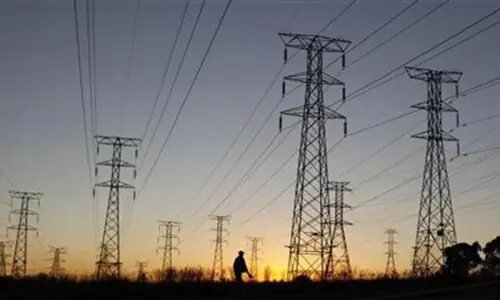
ISLAMABAD: A top Pakistani energy official has revealed that Islamabad is expected to soon secure an extensive deal with Qatar for the import of liquefied natural gas (LNG) to help alleviate the country's energy crisis by fuelling its currently dormant power stations, a report published in The Wall Street Journal said.
Pakistani officials said an agreement regarding the deal, which is estimated to be worth a whopping US $22.5 billion, is anticipated by early March.
“We are negotiating with Qatar and a few other sources,” Petroleum Minister Shahid Khaqan Abbasi told The Wall Street Journal. “The deal will be very competitive and very beneficial for Pakistan.”
Also read: Reservations over LNG deal with Qatar
The current government has failed to overcome the issue of power shortage although it has repeatedly pledged to end load-shedding before the end of its tenure in 2018.
Pakistan is aiming to import up to three million tonnes of LNG per year, most of which is expected to come from Qatar once the deal is finalised. The deal with Qatar will supply LNG to Pakistan’s energy sector for 15 years, according to officials.
Pakistan will purchase the three million tonnes of LNG by paying about $1.5bn annually, or $22.5bn over 15 years although the fluctuation in global oil prices will also have an effect on the cost.
The construction of a terminal by Engro corporation to import LNG at Karachi’s Port Qasim is a strong indicator of the deal being finalised. Another terminal is expected to be built at Port Qasim as well for which bidding is underway.
Pakistan relies on its import of furnace oil and diesel to fuel its power stations although both fuels are relatively expensive and their usage does no significant good in the face of Pakistan’s power scarcity problem.
LNG is seen as a cheaper and more efficient alternative by Pakistani officials. “LNG is more efficient and cleaner for the environment than the alternatives,” Abbasi said. “This is a major shift in our energy mix.”
The import of LNG will enable Pakistan to produce between seven and nine per cent more power, while the import is expected to yield cost savings worth an annual $300mn.
The agreement will be Pakistan’s biggest financial deal to date, analysts say. It will also mark the first time Pakistan will import natural gas as it relied on its own reserves in the past before they started depleting.
Long-term plans to lay pipelines for importing gas from Iran and Turkmenistan are also being executed.
“This would be a positive development for Pakistan’s energy security. Qatar is a reliable and credible supplier,” said Anthony Livanios, head of oil and gas consultancy Energy Stream CMG. “For Qatar, this will help it diversify its customer base. So it’s a win-win situation for both countries.”
If the LNG import plans work out in Pakistan’s favour, it would be able to generate 3,600 megawatts of electricity which is about a quarter of its current yield.
Nicholas Browne, a senior manager at Wood Mackenzie, an oil and gas consultancy, commented that Qatar may have underlying strategic interests in securing this deal with Pakistan.
As for buyer Pakistan, his analysis says it is a favourable time to be in the market for LNG, with regards to both price and availability.