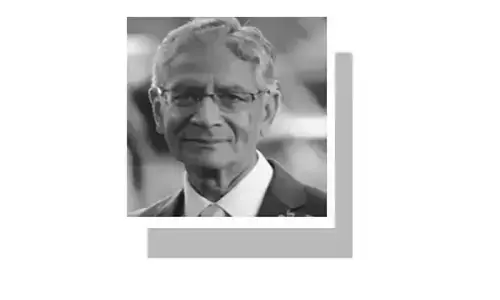
DHAKA: Bangladesh's war crimes court on Tuesday sentenced a former government minister to hang for rape and genocide during the 1971 independence struggle against Pakistan.
Syed Mohammad Kaiser became the 15th person to be convicted of atrocities by the International Crimes Tribunal, which found him guilty of heading a militia that rounded up and killed some 150 people in the nine-month conflict.
The 73-year-old, who uses a wheelchair, did not react as the judge read out the verdict and said he would be “hanged by the neck until his death”.
Lawyers for Kaiser, a former minister with the Jatiya Party which forms part of Bangladesh's ruling coalition, have rejected the charges and say they will appeal.
The government of Prime Minister Sheikh Hasina created the International Crimes Tribunal, a domestic court, in 2010.
It has mostly focused on the trials of the leaders of the largest religious party, Jamaat-e-Islami, although a former minister of the main opposition Bangladesh Nationalist Party has also been sentenced to hang.
Prosecutors said Kaiser had raised a pro-Pakistani militia that carried out a series of murders, rapes and looting.
Judge Obaidul Hassan said the prosecution proved “beyond reasonable doubt “that Kaiser had established the militia, which created a “reign of terror”.
Prosecutor Mohammad Ali said that Kaiser led his militia and Pakistani forces to attack 22 villages in the Brahmanbaria area near the border with India on November 15, 1971.
“At least 108 unarmed Hindu civilians were killed. Scores of their houses were looted and set on fire,” he said.
Kaiser joined the centre-right Jatiya Party in the 1980s and was elected to parliament. He was made state minister for agriculture by military ruler Hussain Muhammad Ershad.
His conviction is unlikely to trigger the kind of protests that plunged the country into deadly unrest last year, after Jamaat's leaders were sentenced to death for their roles in the war.
Thousands of Islamists clashed with police in nationwide protests that left some 500 people dead.
The BNP and Jamaat have called the trials politically motivated, aimed at eliminating opposition leaders rather than rendering justice.
Rights groups have said they fall short of international standards and lack any foreign oversight.
The government maintains they are needed to heal the wounds of the war, which it says left three million people dead.
Independent researchers put the toll much lower.