UNITED NATIONS: Pakistan has urged the UN General Assembly not to allow the creation of new permanent seats in the Security Council as part of the reform process, while underscoring the need for strengthening the role of the 193-member Assembly.
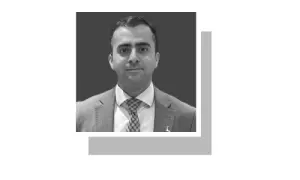
Any expansion in the Council's permanent member category would be a negation of the General Assembly's “democratic character”, Ambassador Masood Khan, Pakistan's permanent representative, told the General Assembly on Tuesday.
“[General Assembly] should pursue the principle of the greatest good of the greatest number by ensuring that all member states — small, medium-sized and large — that make up the family of the United Nations, are adequately and appropriately represented in the reformed Council,” he said in a discussion on the revitalisation of the Assembly.
India, Brazil, Germany and Japan — known as the Group of Four — have been pushing for permanent seats in an expanded council.
Pakistan, along with other members of the Uniting for Consensus (UfC), oppose any additional permanent members in the expanded Security Council. They support the Italy-Columbia proposal that would create a new category of members — not permanent members — with longer duration and a possibility to get re-elected.
Read: US to help India get permanent membership of UNSC
The Security Council is currently composed of five permanent members — Britain, China, France, Russia and the United States — and 10 non-permanent members that are elected in groups of five to two-year terms on the Council.
“Council reform should reflect the aspirations and interests of all; not the ambitions of a few,” the Pakistani envoy said. The reform process, he said, should not be a partial and lopsided, focusing only on increase in the membership, especially permanent seats.
Reform had to focus on increasing representation as well as other equally important matters — the veto, size and working methods, regional representation and relationship between the General Assembly and the Security Council.
Masood Khan said faithful implementation of General Assembly resolutions and decisions required two essential conditions — critical political will of member states and adequate resources. “Appropriate measures should be taken to avoid selective implementation of resolutions, by design or by default.”
As the Assembly moved towards the selection of the Secretary-General in 2016, he said it would be a major challenge to meet expectations for transparency and inclusiveness. The Ad Hoc Group on the matter should make that an important part of its agenda.
“Revitalisation of the UNGA and faithful implementation of its decisions would act as force multiplier in empowering the UN to resolve difficult issues of peace and security, development and human rights.”