8
8
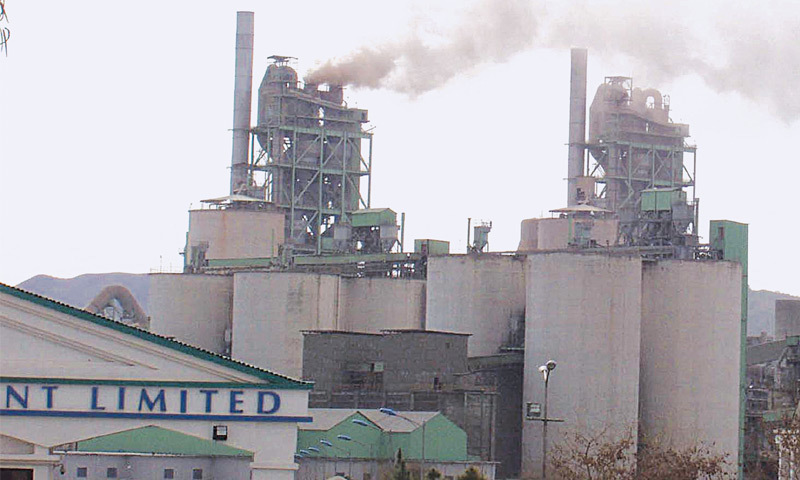

THE sun is yet to set but this sleepy hamlet wears a morose look. By the roadside sits an elderly, bearded man gazing at the sky with weary eyes.
Life for 72-year-old Muhammad Iqbal, resident of Tatral village on the Choa Saidan Shah-Kallar Kahar Road in the rocky area of the Salt Range in Chakwal district, was relatively easy just a few years ago. But now he is worried over health issues that are taking a toll not only on him and his family members but on all the villagers. “Each person is either suffering from severe allergies or chest diseases,” says Iqbal haltingly, his body heaving with coughs.
The Salt Range landscape is captivating. Travel writer Salman Rashid, in his book The Salt Range and the Potohar Plateau, describes it thus: “The Salt Range is a mass of sheer escarpments, jagged peaks, rolling hills and desolate ravines.” One can find here the ruins of temples and forts in Kahoon Valley, a belt ranging from Kallar Kahar that ends at Choa Saidan Shah. This plateau is also home to one of the holiest shrines in Hinduism, Ketas Raj, whose sacred pond is believed to have been formed by Shiva’s tears as he wept for his dead wife.
Now, though, this entire area is facing ruin because of three cement plants that were set up during the Musharraf regime, in 2005.
The residents say that these cement plants have brought economic ruin as well as severe health consequences. “There are rules regarding the setting up of any industrial unit,” says Iqbal. “But a cement plant has been set up in our village and the dust particles and smoke have ruined our health.”
“Yes, dust and smoke from the cement plants is one of the major causes of asthma and chest and skin diseases,” confirms a senior doctor at the Chakwal district headquarters hospital.
Also read: Britian honours Pakistan's World War heroes
“Previously, we used to own cattle that would feed on grass and fodder grown in our fields and meadows,” says Hassan Akhtar, another villager. “But now the quality of pasture has deteriorated due to cement dust and smoke.”
Other villagers talk about smoky cement dust layering tree leaves, crops and grass. “More than 300 head of cattle of my village have died due to grazing on dusty grass,” says Malik Muhammad Ameer who served as naib nazim of his union council.
During the Musharraf regime, when the cement manufacturers set their eyes on the hills, the residents resisted as much as they could. But under the helm of the then zila nazim, Sardar Ghulam Abbas, and chief minister Chaudhry Pervez Elahi, both close aides of Musharraf, cement plants were set up under the watch of heavy contingents of the Punjab police. The reservations of the Kahoon Valley natives went unheeded.
Hundreds of acres of land belonging to the villagers was acquired.
“We did not want to sell our land but the powerful men left us with no option but to liquidate at cheap prices,” says Malik Shehzad, a resident of Waulah, another sleepy village located to the left of a cement plant.
Wildlife in the plateau has also been affected. Considered a safe haven for the Punjabi urial that is found nowhere else in the world, the residents of the Kahoon area now say that urials have migrated. “The mountains are blown up with gunpowder; the noise has scared away the urials and other animals,” says Ameer. “Earlier, the urials had become so comfortable with the local shepherds that they would even graze alongside the goats.”
“At the time of installation, the owners of these plants told us that they would get water from the River Jhelum but instead they installed dozens of turbines in our area due to which the water level in the region has plummeted,” says Riaz Ahmed Malik, a resident of Dulmial, another village adjacent to the cement plants.
Recently, Malik Nazeer Ahmed Niazi, a notable of the area, submitted an application to the Punjab environment minister highlighting the dire conditions the area is in due to the cement factories. “Due to dust and smoke emissions, the diseases of chest, ears and throat are spreading and newborns are among the worst victims,” he stated in the application.
“Cement manufacturing is a very water-intensive industry,” explains Salman Rashid. “If the situation remains the same for the next seven or 10 years, the Kahoon Valley will become unfit to live in as it will be rendered dry.”
The senior administration officer of a cement plant, Malik Muhammad Sarfraz, rejected the villagers’ claims and said that the cement plants had nothing to do with environmental pollution. “We are using modern machinery due to which dust and smoke is not emitted,” he maintains. “We are doing a lot for the betterment of the people of the area. We provided cement free of cost for the construction of mosques and also donated Rs30 million to set up a campus of a public university in the district. Besides this, we are also building a college in Tatral village.”
Published in Dawn, November 14th, 2014