PESHAWAR: The Khyber Pakhtunkhwa government has initiated a programme to impart training to elders to help them play effective role in resolution of various disputes, provide quick justice to people and rid them of prolonged litigations.
In this connection, the home and tribal affairs department organised a four-day training session which concluded here on Wednesday under the Aitbaar Programme, a four-year initiative funded by the DFID to bridge the trust deficit between the government and the citizens, according to a handout.
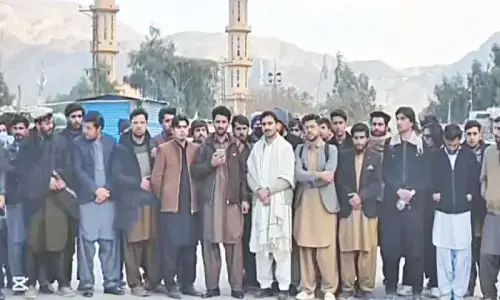
The purpose of the training, attended by over 100 elders from Peshawar, was to build the practical and professional skills of local mediators and jirga members and sensitise them to become more gender responsive and protect human rights, while resolving disputes.
The training sessions would make the jirga members to understand the benefit of maintaining record pertaining to disputes referred to them so their work was performed in a transparent fashion while complying with code of ethics.
It was observed during the training session that in Pakistan, 63 per cent population lived in rural areas and didn’t have access to quick and affordable justice. As a result, citizens, particularly the poor and the disadvantaged segments, have had their basic human rights violated and they suffered injustices in silence.
It was seen that the as the formal justice system was inefficient, slow and inaccessible, alternative dispute resolution mechanisms such as jirgas were considered to be more reliable and trustworthy.
These trainings are designed to strengthen the jirga system in the province by adding more accountability and transparency to it to safeguard human rights, it was observed.
Speaking on the occasion, chairman of the Alternative Dispute Resolution Muntazir Khan said that there was a considerable population in Khyber Pakhtunkhwa which wanted to get disputes resolved in accordance with their local customs and norms.
“This training is an effective way to lessen the burden of civil courts by more than 50 per cent,” he added.
Home and tribal affairs department secretary Syed Akhtar Ali Shah lauded the efforts for strengthening alternative dispute resolution mechanism, and said that these efforts would reduce the pressure on civil courts and provide speedy justice to communities.
Published in Dawn, September 25th , 2014