Dr Tahir Raza Shah Andrabi is an economics professor who teaches in the United States and has researched the impact of aid on the victims of 2005 earthquake in Pakistan, which he says can provide some guidelines on how the state and aid agencies provide relief to the internally displaced people.
Q. What were some of the long-lasting impacts on the 2005 earthquake survivors?
A. We surveyed around 150 randomly selected villages from the affected regions and saw that the physical infrastructure has almost fully recovered nearly everywhere.
The aid ensured a uniform level of development everywhere – near and farther away from the earthquake fault line. What, however, was worrisome was the lack of cognitive and physical development of infants and minors.
From those who were still in their mothers’ womb at the time of the earthquake to those who were three years old, we found that most children suffered from malnutrition, had stunted growth and that their cognitive growth was also affected. All these factors will affect them for the rest of their lives.
We also found that there was a disparity between those that lived near the fault line as compared to those that lived farther away – those that were the closest, for instance, had the most stunted growth.
For cognitive development, we conducted academic tests and for health we checked the height for age ratios.
Q. How can your research help us better cope with the internally displaced persons (IDPs) from North Waziristan?
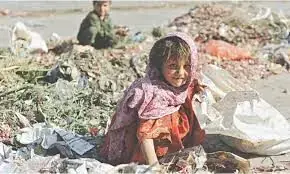
A. We need to realise that small infants and pre-natal children might face a displacement shock, from which they might not be able to recover for the rest of their lives.
Those providing aid to the IDPs should make special care packages for infants and pregnant women, which cater to their nutritional needs. We need to send in highly qualified paediatrics and child psychologists. The World Food Programme (WFP) and the Khyber Pakhtunkhwa (KP) government should start a programme that specifically targets this segment of the population.
Although, the adults should also be helped, we should not forget that the adults have a better coping mechanism than children.
Q. How would you compare the ongoing relief efforts for the IDPs with those for the flood and earthquake survivors?
A. It seems as if no one is taking the IDP crisis as seriously as the natural disasters in the past. We used to have scores of college and university students who would rush to the affected areas to help the victims. Pakistanis, all over the country, would make efforts to help mitigate the victims’ suffering.
What we need right now is to ensure buying power for the IDPs, for which cash is needed. A major success story of the 2005 earthquake was the death and injury compensations, which helped the survivors recover and stand on their feet financially. Something similar needs to be done for the IDPs, without worrying about leakages in the system and whether or not, the cash is going to the right hands.
— Text by Faran Rafi
Published in Dawn, August 1st, 2014