NEW YORK: The Human Rights Watch (HRW) has asked Sri Lanka not to deport members of Pakistan's minority communities until the UN refugee agency gains complete access to them and determines their needs for international protection.
At least 142 Pakistanis arrested during police raids in Sri Lanka in June 2014 are being held in custody of that country's authorities and are at risk of deportation, said a HRW report.
Majority of those arrested are members of the Ahmadi community although a few detainees also include Shia Muslims and Christians.
The report says that the United Nations High Commission for Refugees (UNHCR) has so far been unable to acquire complete access to the detainees, who it said are being kept at the Boosa detention centre. Although, the UN refugee agency has recognised at least six of the group as refugees.
Media reports quoted Immigration Controller Chulananda Perera as saying that the Sri Lankan government could deport the detained Pakistanis because it had not sanctioned them to register asylum claims.
“Sri Lankan authorities are threatening Pakistani minority group members with deportation at the very time when persecution of these groups is escalating in Pakistan,” said Bill Frelick, UN refugees director.
“Preventing asylum seekers from lodging claims in no way absolves Sri Lanka from its duty not to return them to possible persecution.”
According to the principle of nonrefoulement in international law, governments cannot pressurise returning refugees to places where they would be vulnerable to persecution. The principle applies equally to people prevented from lodging asylum claims who would still face serious harm upon return.
The raids on Pakistani minorities in Negombo, a city on the western coast of Sri Lanka, commenced on June 9, with authorities citing security concerns for the crackdown. Negombo has been a major haven for refugees from Pakistan. In 2013, UNHCR registered nearly 1,500 refugee claims of Pakistanis in Sri Lanka.
Attacks on religious minorities
Attacks on religious minorities in Pakistan are rampant and the government has failed to investigate cases of violence and discrimination against religious and ethnic minorities, the report noted.
The report also noted that Christian and Ahmadi communities were especially vulnerable to persecution and discrimination in Pakistan due to threats by militant organisations.
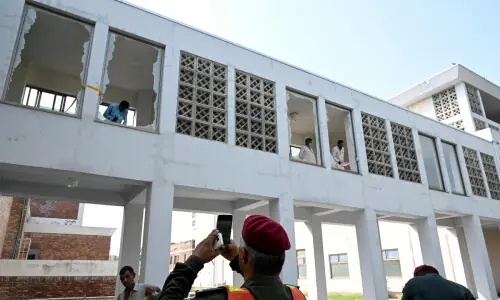
Last year, in September, twin explosions at All Saint's Church in Peshawar's Kohati gate area killed 80 people and wounded over 100 others.
Explore: Twin church blasts claim 80 lives in Peshawar
 |
| A Christian mourns the killing of his relative, in two suicide bomb attacks on a church in Peshawar. — File photo |
Notwithstanding the persecution of members of ethnic and religious minorities in Pakistan, the government has shown callous disregard for those who have fled the country and sought asylum abroad.
Foreign Office spokesperson Tasneem Aslam was unsympathetic to the plight of the detained refugees in Sri Lanka, saying: “These people [asylum seekers] obtained asylum in Sri Lanka by badmouthing Pakistan. If they are in trouble, I have no idea.”
Take a look: Sri Lanka cancels on-arrival visa facility for Pakistanis
“Sri Lankan authorities should know that Pakistan fails to protect its minority communities from persecution,” Frelick said.
“Sri Lanka must honour its international obligations, and allow UNHCR access to ensure that no detainee is deported to face the risk of persecution or torture.”