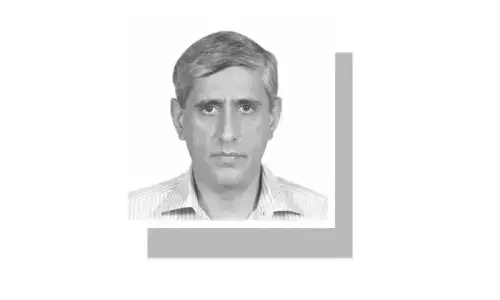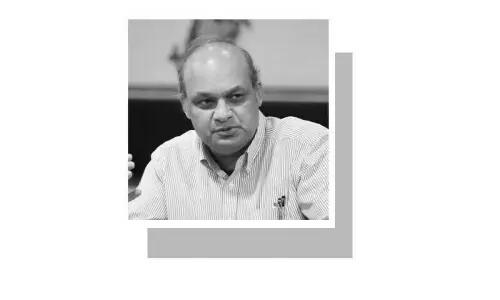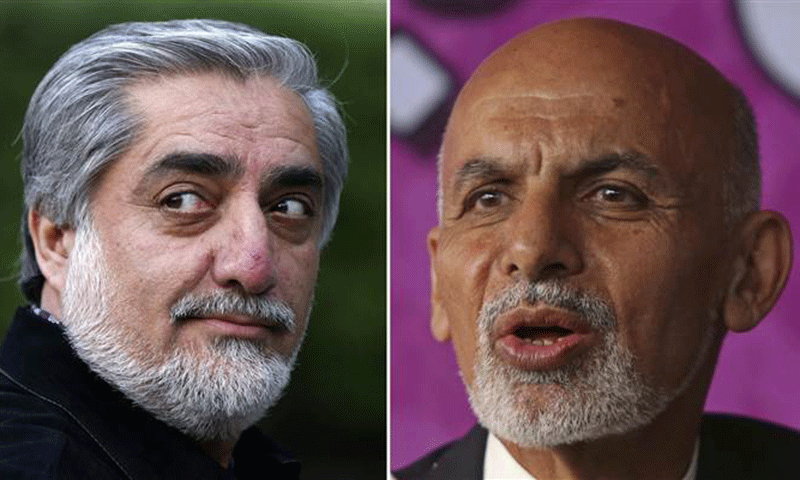
KABUL: Afghanistan's presidential election will go to a second-round vote on June 14 between former foreign minister Abdullah Abdullah and ex-World Bank economist Ashraf Ghani, final results showed Thursday.
The head-to-head election will choose a successor to President Hamid Karzai in Afghanistan's first democratic transfer of power.
Whoever wins will have to oversee the fight against a resilient Taliban insurgency as 51,000 US-led troops depart this year, as well as try to strengthen an economy that relies on declining aid money.
“After a thorough review, it is clear that no candidate has been able to win more than 50 per cent and the election goes to a second round,” Ahmad Yusuf Nuristani, head of the Independent Election Commission (IEC), said.
Abdullah secured 45 per cent of the vote on April 5, with his main rival Ghani on 31.6 per cent, according to the final results, which came after weeks of deliberation over fraud allegations.
The 2009 election, when Karzai retained power, was marred by fraud in a chaotic process that shook confidence in the multinational effort to develop the country, and also marked a sharp decline in relations with the United States.
The run-off was originally scheduled for May 28, but ink and other material was damaged in an insurgent attack on the election authorities' warehouses.
“Some sensitive materials that were stocked at IEC headquarters for the second round were destroyed by the Taliban attack — providing those materials again needs time,” Nuristani said.
Abdullah said on Wednesday that his campaign had evidence of fraudulent voting that could have a “significant impact on final results”, but the official results were closely in line with the preliminary figures released late last month.
Abdullah this week received a major boost with the endorsement of third-placed Zalmai Rassoul, a close ally of Karzai, who has stayed publicly neutral in the election.
Karzai, who has ruled since the Taliban were ousted in 2001, is constitutionally barred from a third term in office.
Fears for the future
Another costly, and potentially violent election could be avoided by deal-making in the coming weeks— and Rassoul's support for Abdullah increased pressure on Ghani to concede.
The United Nations' mission has welcomed Afghanistan's conduct of the vote, but warned officials that they must address all fraud allegations openly.
The first-round election last month was hailed as a success, with turnout far better than in 2009 and the Taliban failing to launch a major attack despite threats to disrupt the vote.
Both candidates have pledged to explore peace talks with the Taliban and sign a deal with Washington that could allow up to 10,000 US troops to stay on after this year on a training and counter-terrorism mission.
Many observers fear that Afghanistan faces a huge challenge in suppressing the Taliban insurgency with declining foreign military assistance, and also that the nation's economy could collapse as donor money falls.
“It is important to recognise that the war is not over yet,” Ershad Ahmadi, the Afghanistan deputy foreign minister, said Thursday at the opening of a meeting in Tokyo of delegates from around the world gathered to discuss the country's future.
“On the same token, to ensure lasting success, it is crucial that the international community maintains its support and engagement in Afghanistan at this critical period,” Ahmadi told the representatives from the International Contact Group on Afghanistan and Pakistan.
An International Crisis Group (ICG) report released on Monday concluded that “the overall trend is one of escalating violence and insurgent attacks” in Afghanistan.
The insurgents “are blocking roads, capturing rural territory and trying to overwhelm district administration centres”, it said.
John Sopko, head of the US watchdog on Afghanistan's reconstruction, warned Wednesday that its aid-dependent economy may not be able to keep open infrastructure such as power plants that have been built with donor funds.
“Each new development project that the US and other international donors fund increases overall operation and maintenance costs, adding pressure to Afghanistan's operating budget,” he told an audience in Washington.
“It is questionable whether the Afghan entities charged with financing these projects can afford them.”