KHUSHWANT Singh’s final journey was by train, to Pakistan. He did not require documents to cross the border. Ashes do not need visas.
He was cremated in New Delhi on March 20. A portion of his ashes were interred under his favourite tree in the garden at Sujan Singh Park. Some will be taken to his home in hilly Kasauli. The rest were given to me by his daughter Mala for interment in Hadali (now District Khushab, Pakistan), where he was born 99 years ago.
There’s no direct train link anymore between New Delhi to Lahore. I caught the Shadabti Express to Amritsar. It is a six-hour journey, time enough to refresh my familiarity with Khushwant’s works.
These included his autobiography Truth, love and a little malice (written prematurely at the age of 87), his evocative translation of The Japji and the Rehras: the morning and evening prayers of the Sikhs (published last year), and Death at my doorstep — a cemetery crammed with obituaries he had written of people he had known but not always liked or admired.
He dismissed Lord Mountbatten as ‘Lord of Baloney’, back-handed Sanjay Gandhi as the ‘Young Dictator’, lauded his mentor Manzur Qadir as ‘The Role Model’, and described movingly Zulfikar Ali Bhutto’s final days ‘From the Death Sentence to the Gallows’.
To travel from New Delhi to Lahore now, one has to go to Amritsar, catch the Samjhauta or Friendship Express, change trains again at the Wagah/Attari border, and complete the journey to Lahore in yet another train. The goodwill inherent in the train’s title evaporates even over the short 42 kilometre distance between Amritsar and Lahore.
I took the less troublesome route and walked across the border at Wagah/Attari. No officials on either side of the divisive white line seemed interested in the contents of the stainless steel urn I carried. Whatever attention Khushwant would receive would be at his birth village of Hadali, some 250km northwest of Lahore.
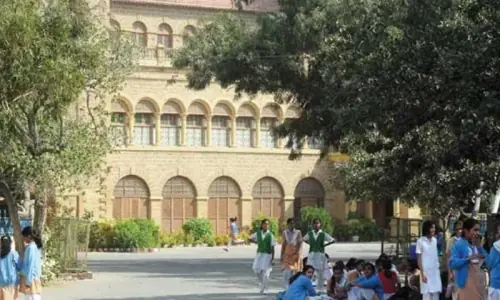
There, he is still a household word in a community consisting entirely of Pakistani Muslims. Hadali, in Khushwant Singh’s days a ‘tiny hamlet with less than 300 families’, is now a congested compression of almost 50,000 souls. Its most prominent building appears to be its Government Boys’ School. Its spacious dusty grounds were overrun by 600 boys in identical uniforms with differing shades of dirt.
The main school hall is still, according to the bearded headmaster, as Khushwant left it as a young pupil in 1920. He visited it 60 years later. He remembered the high roof supported by sagging timbers, the chapel-shaped classrooms on either side and the rugged plaster. It was too much for him. He recalled afterwards: “Overcome by emotion, I broke down.”
Could there have been a better location for the marble memorial plaque I had brought with me? A niche was gouged out of the external wall of the school hall and the marble slab grouted in it. His grey ashes were merged and lost within the wet grey cement. The commemorative inscription read: “In memory of Sardar Khushwant Singh/ A Sikh, a scholar and a son of Hadali (Punjab).”
After the mason had applied the finishing touches, rounding the corners carefully, I read the opening lines from Khushwant Singh’s translation of the Japji: “There is one God. He is the Supreme Truth. He the Creator is without fear and without hate.” I ended with the Shloka or Epilogue, one line of which would have been requiem enough: “The toils have ended of those that have worshipped Thee.”
While I was reciting these verses, I knew Khushwant would not have objected. He was only an arm-chair agnostic. Which truly believing agnostic would have laboured as he did to translate the Sacred Writings of the Sikhs?
Which agnostic would have straddled the spiritual divide and translated with such understanding Allama Iqbal’s epic remonstrance Shikwa and God’s riposte Jawab-i-Shikwa?
Which self-respecting agnostic would have, in the final year of his long life of ostensible disbelief, translated the Japji and the Rehras with such feeling and sensitivity?
Khushwant Singh did not need to make peace with his Maker with such gestures of conciliation, no more than he needed to be a literary enfant terrible. Khushwant Singh was above that. He had outgrown his time, overwhelmed his contemporaries with his expansive humanity.
If there was anything he never outgrew it was his affection for Hadali. It was of this cradle, this crucible of his life that he wrote: “This is where my roots are. I have nourished them with tears of nostalgia.”
Those are the closing lines you can read on his memorial plaque at Hadali placed there on April 22. n
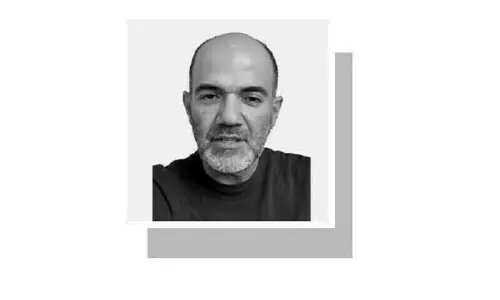
The writer is an author and art historian.
www.fsaijazuddin.pk