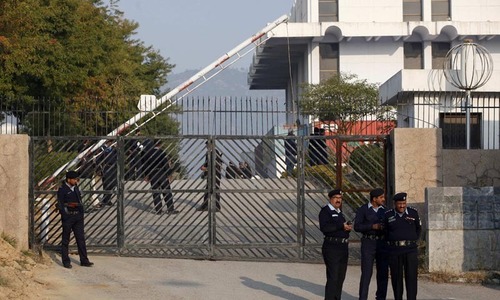
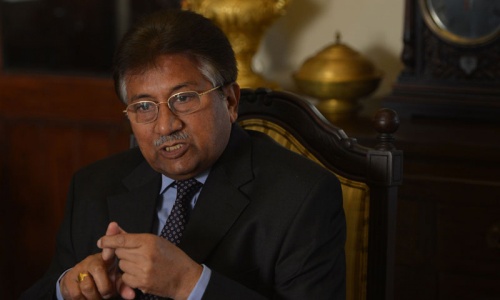
ISLAMABAD: Justice Faisal Arab of the Sindh High Court on Thursday excused himself from today's hearing of the treason case against former military ruler Gen (r) Pervez Musharraf but later had to issue a statement that he had merely walked out of the hearing, DawnNews reported.
Earlier today, it had been widely reported that Justice Arab had recused himself from the court following an exchange of arguments with Musharraf's counsel Anwar Mansoor.
However, the judge later clarified that he had only walked out of today's proceedings as opposed to dissociating himself from the case altogether.
Adjourning the case to March 31, the court also ruled that its earlier order for the government to arrest and produce Musharraf if he refused to appear before it on the said date on his own remained intact.
Earlier during today's hearing, Mansoor had argued over the court's earlier order of the issuing of a non-bailable arrest warrant against his client.
Mansoor told the judges that inclusion of the arrest warrant in the court's order gave the impression that the former military strongman was not appearing before the court on purpose, adding that that was not the case. He said his client had serious reservations against the court's move.
Upon hearing this, chief prosecutor Akram Shaikh began his line of arguments but was interrupted by Mansoor who said that the defence team had objections against Shaikh's appointment as prosecutor, adding that the court had reserved its order over the matter.
He moreover said that Shaikh should not be allowed to argue in court as the defence team had been raising objections against his appointment from day one as well as against the manner in which the proceedings were taking place.
Mansoor further claimed that it was common knowledge in the corridors of the National Assembly and the Senate that Shaikh was tasked with the objective of awarding punishment to Musharraf.
Justice Arab said that submission of an application against the prosecutor's appointment did not mean he should be stopped from arguing in court. The judge added that it was the court's job to make a decision on the matter and if the application was accepted only then could Shaikh be stopped from performing his duties as chief prosecutor.
Subsequently, Justice Arab left the court room saying that if the defence did not think the judges to be impartial, the country had no shortage of jurists who could be asked to do the job.