

By 2050, up to 1,500 Indonesian islands will be wiped off the map.
By 2030, Soekarno-Hatta International Airport, which serves the capital and is about five kilometres from the seafront, will be under water.
Capital Jakarta, with 40 per cent of its land below sea level and sinking, will see its northern districts transformed into lakes then.
These bleak projections reflect scientific predictions of the effects of climate change on Indonesia, if nothing more is done.
The Indonesian archipelago has some 17,000 islands, with about 6,000 permanently inhabited.
"This archipelago's biggest threat is rising sea levels, where 42 million people living three kilometres from the coast are vulnerable if estimated sea level rise reaches up to 90 centimetres by the end of the century," said Ancha Srinivasan, principal climate change specialist with the Asian Development Bank (ADB).
He joins the increasing number of scientists sounding the alarm bells on the harmful effects of climate change, which they say will hit Indonesia hard, given its 80,000-kilometre-long coastline that makes it the second-longest in the world, and the vastness of a country where the poor are also the most impacted and unprepared.
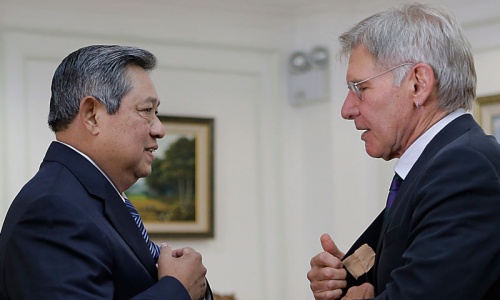
United States Secretary of State John Kerry gave this global attention when, in his climate change speech in Jakarta recently, he warned that half of the capital could be submerged if sea levels rose by half a metre, and changing acidity meant that fish supply dwindled.
Later in the week, the British foreign secretary's special representative on climate change, Sir David King, was invited to Jakarta and Bandung to share his country's experience in going green and managing one of Britain's worst floods in decades.
Both he and Kerry's presence days apart was coincidental, but it was an indication of the importance they placed in Indonesia as a developing country ranked as one of the most vulnerable in Southeast Asia to effects of climate change.
Large areas of Indonesia are considered at high or extreme risk, noted British risk analysis and mapping firm Maplecroft in its latest Climate Change Vulnerability Index.
"High poverty and population density levels, along with the concentration of economic assets in areas exposed to extreme events associated with climate change, exacerbate risks in Indonesia," the report said.
"When we look around the world, we are seeing serious extreme events increasing in frequency — exactly what we expect from climate change," Sir David told The Straits Times.
He pointed out that typhoon Haiyan was the most intense to hit land, Melbourne's 44 degree centigrade days last month hit its most sizzling levels since 1939, and hurricane Sandy's landfall in New York was an unexpected superstorm to hit that city.
"Extreme weather events that used to happen once every 100 years will now be happening more frequently" unless climate change is brought under control, he said.
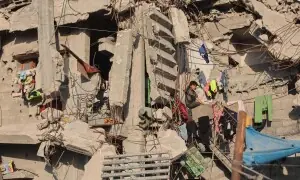
Rising sea levels have seen Indonesia lose 24 small islands off Aceh, North Sumatra, Papua and Riau between 2005 and 2007, according to a Ministry of Marine Affairs and Fisheries report.
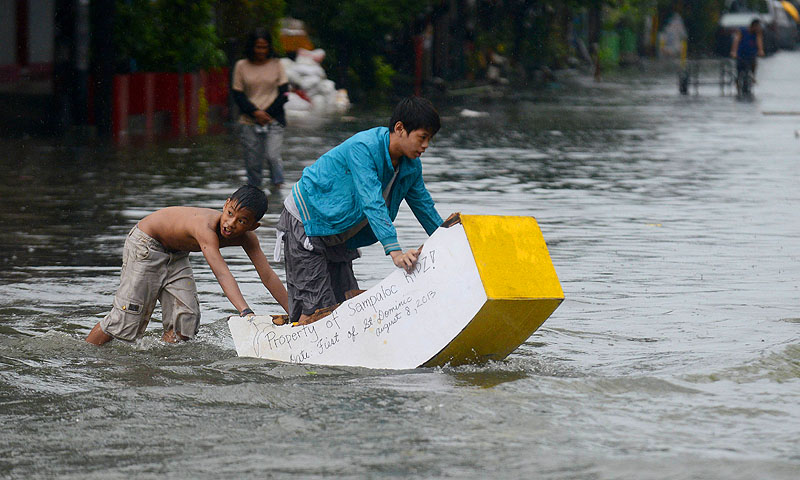
Floods during the rainy season in Indonesia have become heavier than usual, pinned down to warming temperatures that bring more moisture into the air.
In South Sulawesi, fishermen are no longer able to predict wind directions and seasons, causing uncertain fish supply.
The acidity level change of 0.3 on the pH scale has driven fish to head out further to the ocean.
"It may be a small change, but had a significant impact on marine ecosystems and fish spawning habits," said ADB's Ancha.
"Climate change is the biggest single challenge to the future of our civilisation, and your country and my country are all at risk," said Sir David, echoing the grim message Kerry had delivered days earlier.
By arrangement with The Straits Times/ANN