KABUL: Afghanistan’s presidential candidates held rallies in Kabul on Sunday at the start of a campaign to elect Hamid Karzai’s successor, as the killing of a front-runner’s aides highlighted the security threat to the poll.
Gunmen shot dead two members of former foreign minister Abdullah Abdul-lah’s team in the western city of Herat on Saturday, dealing an early blow to hopes of a peaceful campaign as the country prepares for its first democratic transfer of power.
The April 5 election is seen as a key test of the effectiveness of the US-trained 350,000-strong Afghan security forces as US-led invading foreign troops prepare to exit the country, while the future of US troops in the country beyond 2014 is set to dominate the election agenda.
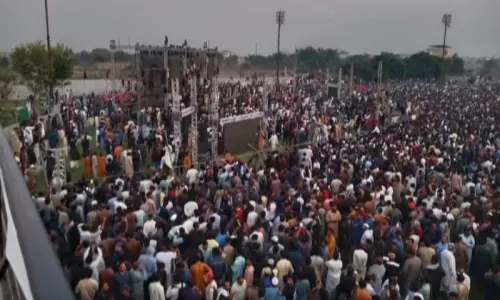
Earlier in the day, thousands of people, mostly men, gathered in giant wedding halls where candidates delivered speeches and called on war-weary Afghans to vote for them.
The elder brother of President Hamid Karzai, Qayum Karzai, started his campaign in the Loya Jirga, a traditional gathering venue.
“We will keep all the positive achievements of the current government and we will work on those works that this government has not done yet,” he said in front of thousands of supporters. “Reforms will begin with us.”
Earlier, Mr Abdullah, who came second to Mr Karzai in the chaotic and fraud-riddled 2009 election, conveyed his condolences to the families of his slain aides and outlined his priorities as “security in the far villages of Afghanistan, fighting corruption, (and) enforcing rule of law”.
He said the signing of a bilateral security agreement (BSA), which would allow about 10,000 US troops to be deployed in the country after Nato withdraws by December, was essential to safeguarding the country’s future.
“Afghanistan is in a place, in a position that needs the continuation of international cooperation and help,” Mr Abdullah said.
“Insha Allah (God willing), with the signing of this agreement, the problems... will be solved.”
Mr Abdullah’s rival Ashraf Ghani, a 64-year-old academic, told one packed hall: “Reforms will begin with us: myself, Mr Dostum and Mr Danish.” He was referring to his running mates, the former Uzbek warlord, General Abdul Rashid Dostum, and ethnic Hazara tribal chieftain Sarwar Danish.
Security was tight at the rallies, which were guarded by the Afghan national army.
But the killing of Mr Abdullah’s aides weighed heavily on some people’s minds.
Voters worried
Arefa Alizada, an 18-year-old Abdullah supporter who attended one of the rallies, said: “I am concerned about security of the election, especially after I heard that two campaigners were killed yesterday. If it worsens, I and many other people won't be able to vote.”
Afghanistan has been gripped by a Taliban rebellion fighting the invading foreign troops for the past 12 years.
Most US and Nato troops are set to leave at the end of this year, leaving Afghans in charge of their own security.
President Karzai had been expected to sign the US proposed bilateral security agreement late last year. But he has stalled and said his successor might now complete negotiations — plunging relations with the US, Afghanistan’s key donor, to a fresh low.
US-installed Karzai has ruled the country since the fall of the Taliban in 2001, surviving assassination attempts and the treacherous currents of Afghan political life as billions of dollars of military and development aid poured into the country.
He is barred from seeking a third term, leaving an open field to compete in the April 5 vote, which is likely to trigger a second-round run-off in late May between the two strongest candidates.
Waheed Wafa, a political analyst, described Mr Abdullah and Mr Ghani as the front-runners, with Mr Karzai loyalist Zalmai Rassoul seen as a possible third force.—AFP