0
0

The elusive consensus
PRIME Minister Shaukat Aziz’s call for developing a broad national consensus on critical national issues comes against a political background characterised by a lack of agreement on some of the nation’s fundamental problems. Speaking at a PAF commanders’ conference in Islamabad on Tuesday, the prime minister said that internal dissensions had led to vulnerability, and therefore what the country needed was “a broad consensus on fundamental national issues for the greater good of the people”. He did not, however, tell us precisely how a national consensus is to be achieved, and what effort his government is making to solve some of the problems whose solution has dodged the nation for a long time. For instance, as the general election approaches, there is no consensus yet on how President Musharraf is to define his future role — whether he is to give up one of the two posts and how precisely he intends to achieve a national consensus on his future political role. His position as army chief and president may appear strong, but actually it is proving to be a political liability, because he is holding the dual office not as a result of a consensus but because of an expedient deal with the MMA. The same is true of the National Security Council and the revived Article 58-2b. Both are inconsistent with fundamental democratic principles because the first subordinates the elected leadership to the generals, while the second empowers the head of state to sack an elected government and dissolve parliament.
As Pakistan’s history shows, arbitrary changes in the Basic Law, or constitutional amendments effected through contrivances and opportunistic deals do not prove lasting, and disappear with regime change. We know that Ayub’s constitutional system, based on indirect election of the president and assemblies, collapsed after Ayub resigned in 1969 following countrywide agitation. The same fate befell some of the obnoxious constitutional changes that Ziaul Haq had made in the 1973 Constitution. Ironically, it was Zia’s protege, Nawaz Sharif, who did away with Article 58-2b. The present system, too, with Gen Musharraf “elected” as president, has come into being not through a national consensus but through deals between the generals and some politicians, including those who now claim to be in the opposition. In sharp contrast, the 1973 Constitution has survived two military coups and “legal” manipulations because it was framed by the elected representatives of the people.
Apart from the constitutional logjam, there are many other political problems - like the dams, the Hudood ordinances, Balochistan, women’s rights, the mode of privatisation, etc, which have defied a solution mainly because there is no consensus on them. What the prime minister should have told his audience was that the best and only way of achieving a broad consensus on issues of the day is a free interplay of democratic forces — a process in which extremists find themselves cornered by the vast majority believing in moderation. Repeated military interventions involving frequent interruptions of the democratic process have stunted the growth of democratic institutions in Pakistan and denied us the mechanisms through which democratic countries solve their problems. Now even political groups and student unions have developed an authoritarian outlook, while the absence of a consensus-seeking approach has led to the rise of armed militancy which even the present military-led government is often unable to control.
Our parliamentary defaulters
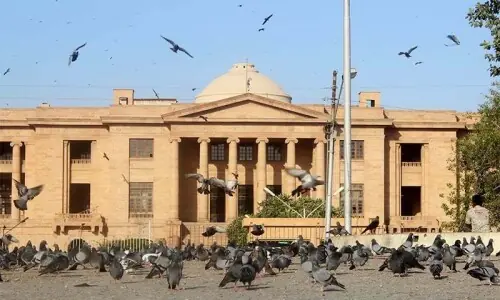
THE move by the Election Commission to suspend the membership of 47 legislators will evoke mixed reactions. First, the EC is to be commended for enforcing Section 42A of the Representation of People Act 1976 that requires parliamentarians to submit a statement of their assets every year by end September. It is good that the defaulters have been taken to task. The point is one of disappointment in that in spite of being in a position of responsibility, our elected representatives do not consider it important to adhere to requirements of the law. What is most shocking is that the highest number of defaulters — 15 — belong to the PML-Q which is presiding over the fate of the country. Next in line are members of the MMA, nine of whom have not filed their statements in time.
Although like last year, most of these members will probably file their statements one of these days and return to the assemblies and Senate, it betrays their contempt for the Election Commission and the House whose membership they hold. Such a lack of respect for the elected bodies and the commission which holds the polls is indicative of the representatives’ lack of concern for democracy. They display this mindset in their frequent absences from the House resulting in lack of quorum on several occasions. The party leaders must take note of this unbecoming behaviour of their colleagues. While this is a grave matter, there is something else that needs to be addressed equally seriously. That is the statements of assets the MNAs, MPAs and Senators file. In May, the Election Commission had published the list of assets of the legislators and what emerged was unbelievable. Many of the parliamentarians had hardly any assets to declare. Our representatives appear to be a deprived lot with many of them not even owning a car. Since the wealth of the parliamentarians is not a guarded secret, one reaches the conclusion that the exercise of declaration of assets is no more than making a mockery of transparency in government. The EC can challenge the returns only if the public complains. Given the powerlessness of the common man, will any one dare do that?
More bloodshed in Sri Lanka
YET another suicide attack — Sri Lanka’s worst ever — by the Tamil Tigers has cast a pall over the peace process. More than a hundred people, mostly sailors, died on Monday in the rebels’ latest strike, prompting retaliatory attacks on Tiger installations by the military. A few days earlier, rebels killed 129 Sri Lankan soldiers in fierce fighting, dealing another blow to the 2002 ceasefire. The death toll of civilians, military men and rebels has risen to more than 2,000 since the beginning of the year. Under these circumstances, it is uncertain what the rebels and the government hope to achieve during the next round of peace talks scheduled for later this month in Geneva, especially since the Tigers dropped out of negotiations last April. More than holding a formal round of peace talks, what is needed is an environment in which a serious dialogue can be conducted by both sides on a final peace settlement.
After the EU ban on the LTTE, the Tigers have done their utmost to sideline the Scandinavian peace monitors, although Norway is still trying to create the conditions necessary to move the negotiating process forward. The government, too, has contributed to the deteriorating situation by intensifying military moves to recapture Tiger-held territory. It is also refusing access to the peace monitors to the battle terrain in the north where the army suffered heavy casualties last week. With both sides showing inflexible attitudes, the peace process can hardly be expected to make progress. The ultimate fear remains that of the peace monitors refusing to continue with their efforts. That would be a colossal loss for both sides, and mean a return to the cycle of violence that previously cost Sri Lanka 65,000 lives.
High POL prices are here to stay
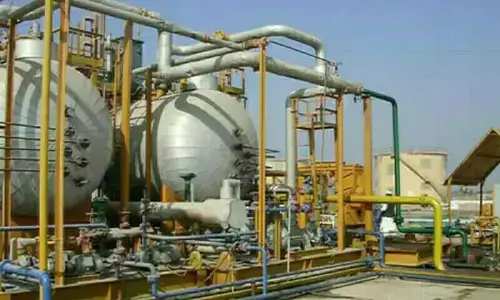
THE peak POL prices will remain unchanged for at least some fortnights despite the 25 per cent fall in world oil prices in recent weeks. Prime Minister Shaukat Aziz has said the POL prices would not be brought down until the subsidy paid earlier on them was wiped out. There are various figures of the total subsidy involved and one estimate is that it may take three months for the subsidy to be adjusted.
And the prime minister’s advisor on Finance Dr Salman Shah says the government has to pay Rs45 billion to the oil marketing companies before the prices are brought down. And it is likely that by the time the subsidies come to zero, the world price of oil is again closer to the peak of $79 from where it came below $60. By the time harsh winter sets in, the demand for oil for domestic heating, particularly in the US, would increase and push up prices again.
In anticipation of high world oil prices the government did not budget for any revenue as petroleum development surcharge this year, while in the last fiscal year it had collected Rs22.2 billion on this head against the budgeted Rs16.6 billion. It has also budgeted for the current year a gas development surcharge of Rs18.1 billion against last year’s 22.2 billion.
In the earlier years when the world price of oil went below even ten dollars a barrel the government did not reduce the domestic price of POL but pocketed the large fiscal gain for itself. But now with oil price at its peak price, people will have to pay more for gas and electricity. Hence, inflation in the first quarter of the new financial year rose to 8.45 per cent compared to the first quarter of last year. Food inflation in the first quarter was 11.26 per cent, while we have been promised an overall inflation of 6.5 per cent this year. So any relief from any quarter is welcome.
In addition to the gas development surcharge of Rs18.1 billion, the government will this year receive royalty on domestic oil of Rs9.3 billion and royalty on gas of Rs20.3 billion — a total of Rs29.6 billion. Along with that, the current year is expected to be a good year for tax revenues as Rs840.9 billion is expected to be collected against last year’s Rs715.7 billion, which was again more than the budgeted Rs700 billion. Hence there is plenty of budgetary scope for lowering the prices of POL at home at a time of falling oil prices.
The OPEC has decided to bring down its output by a million barrels a day and there will be shortage of oil for heating purposes in the US in the winter. Nevertheless world oil prices are not expected to rise too high in the near future.
Even otherwise Pakistan gets its oil from the Gulf with Saudi Arabia as the principal supplier. Unlike the US sweet crude or the Brent crude of the North Sea, the heavy Gulf crude is usually priced up to ten dollars a barrel than the US crude. Even otherwise the tax revenues from all oil sources in the last fiscal year came to Rs105 billion compared to Rs67 billion the year before, that is a hefty income for a small economy like Pakistan’s.
If the POL prices cannot be brought down now because there has occurred a decline in the international oil price, then what is the sense in having a fortnightly formula for price fixing. Why not fix the price every three months instead of raising expectations every fortnight. The purpose of the fortnightly exercise was to quickly readjust the domestic price the moment there occurs a change in the world oil price. But, as the situation exists today, the domestic POL prices may be reduced after a long time.
Meanwhile the rich refineries, affluent oil marketing companies and the petrol pump owners are making gains and the government collects larger revenues from their enlarged incomes. The consumer or the common man remains the perpetual victim.
Forced to buy generators to make up for the failure of electric supply the consumers have to pay diesel oil or petrol over and above their daily consumption. All that adds to the family budget in a big way while the poor man spends more money on candles. The prime minister wants to make Pakistan an energy trade and manufacturing hub of the region. President Musharraf is even more enthusiastic about that. And the prime minister wants to see Karachi as a commercial and industrial hub of the region beginning with the IT hub it is supposed to become.
How do we make the country an energy, commercial and industrial corridor for Central Asia and west China without adequate energy and a steady supply of that. With a constant supply of power, gas, and water, Karachi‘s industrial production would go up by 30 per cent and its economic expansion would be much faster and industrial investment much higher.
The PM has directed the KESC to match its supply of power with the actual demand. At the same time he says the demand for power in the country is increasing by 10-12 per cent annually. The managing director the privatized KESC says now the demand for power in the city and its supply is equal and the problem is only in the transmission and the distribution breakdowns which are too frequent. We can talk of demand and supply of power being equal in the city because of the large number of industrial generators taking care of the industry and some homes as well. The prime minister has suggested the introduction of mobile transformers. They can help to some extent. He hopes the situation will improve distinctly by April. The prime minister says the central government would lend enough money to the company to improve the facility. The managing director of the KESC says that Rs22 billion would be spent in the next three years to expand and strengthen the system and there would be hundred megawatts more power in three years. What matters is steady supply with few breakdowns and not the larger installed capacity.
Meanwhile, the PM has advised the KESC to open more complaint centres. The need is to make the existing complaint centres function well and ensure steady supply of power. Unless they can do that and meet the people’s demand, more complaint centres would only invite more violence from the frustrated or enraged consumers who have been denied power. What is far more important is the entire KESC staff should be more alert and maintain the system far better and attend to complaints promptly and efficiently. Otherwise the new exercise may mean more money down the drain.
The Wapda, under instruction from the government has done well to resume negotiations with the Chinese Schenhua group for the use of Thar coal for power production. The earlier stalemate which has lasted too long was over the purchase price of power from the Thar project which was to cost $500 million. Wapda was offering 5.7 cents a unit while Schenhua wanted a far higher rate arguing that Wapda was paying 8-13 cents per unit for the power purchased from independent producers who used gas or diesel oil or furnace oil.
Simultaneously, it has been reported that the capacity of the Thar plant will be raised by 600 megawatt to 1000 megawatt which means the investment cost will be far more than 500 million dollars. Initially the Schenhua group may have to use imported coal while preparing the Thar coal for later use.
Meanwhile for all the headlines the gas pipeline outside Pakistan have been making and the hopes they have been raising for ample gas supply, uncertainties about the pipelines have increased. The most non-controversial of them — the pipeline from Qatar — now seems out of the picture. Qatar has now said it does not have enough gas so it cannot build a pipeline from its gasfield to the Pakistan border. The pipeline from Daulatabad, Turkmenistan, has become uncertain because of the escalated fighting in Afghanistan. The same Afghan problem held up the earlier project and the situation is no better now. Although India too is interested in the project and Asian Development Bank is willing to finance it.
Finally there is the seven billion dollar Iran-Pakistan-India gas pipeline which has been under frequent discussion for long despite strong US disapproval. The principal deterrent is the high price of the gas demanded by Iran or the low price offered by Pakistan and India.
Now both sides have agreed to appoint a foreign consultant and chosen a Singaporean Gaffney Cline who lives in India. He will suggest a mutually acceptable price as well. The three-country working group is expected to meet after the consultant swings into action before the end of the year. So there is no hope of getting gas from outside Pakistan early.
Meanwhile the government is pursuing negotiations with China and the US for production of nuclear power through larger reactors than we have and also through diverse alternate energy beginning with wind power. And the efforts to look for oil offshore has been stepped up with far more foreign companies authorized for that purpose. Looking for oil amidst water is a costly exercise and the companies may have to dig deeper than on land. But if India can strike oil off Mumbai, Pakistan has a reasonable chance of doing that despite the failure of the earlier attempts.
Despite the shortage of power and the chaos caused by frequent breakdowns in supply hardly any effort is made for energy conservation or to improve the energy economy. It is all illuminations all over the place at the drop of a hat.