WASHINGTON: In May, the White House leaked word that it would start shifting drone operations from the shadows of the CIA to the relative sunlight of the Defence Department to be more transparent about the controversial targeted killing programme. But six months later, the so-called migration of those operations has stalled, and it is now unlikely to happen anytime soon.
The anonymous series of announcements coincided with remarks President Barack Obama made on counterterrorism policy at National Defence University in which he called for “transparency and debate on this issue.”
A classified Presidential Policy Guidance on the matter, issued at the same time, caught some in government by surprise, triggering a scramble at the Pentagon and at CIA to achieve a White House objective.
The transfer was never expected to happen overnight. But it is now clear the complexity of the issue, the distinct operational and cultural differences between the Pentagon and CIA and the bureaucratic politics of it all has forced officials on all sides to recognise transferring drone operations from the Agency to the Defence Department represents, for now, an unattainable goal.
“The physics of making this happen quickly are remarkably difficult,” one US official said. “The goal remains the same, but the reality has set in.”
Another US official emphasised that the transfer is still continuing.
“This is the policy, and we’re moving toward that policy, but it will take some time,” the official said.
“The notion that there has been some sort of policy reversal is just not accurate. I think from the moment the policy was announced it was clear it was not something that would occur overnight or immediately.”
Officials at the CIA and the Defence Department are loathe to try to fix a programme that they don’t think is broken, even if it has become a political liability for Obama, who has faced constant pressure from human rights activists, his political base, and a growing chorus of libertarian Republicans to scale back the programme and subject it to greater public scrutiny. But the pitfalls of transferring operations reside in more practical concerns. The US official said that while the platforms and the capabilities are common to either the Agency or the Pentagon, there remain distinctly different approaches to “finding, fixing and finishing” terrorist targets.
The military operates its own drones, of course, and has launched hundreds of lethal strikes in Iraq and Afghanistan. But the CIA is more “agile,” another former official said, and has a longer track record of being able to sending drones into places where US combat forces cannot go.
“The agency can do it much more efficiently and at lower cost than the military can,” said one former intelligence official. Another former official with extensive experience in intelligence and military operations said it takes the military longer to deploy drones — in part because the military uses a larger support staff to operate the aircraft.
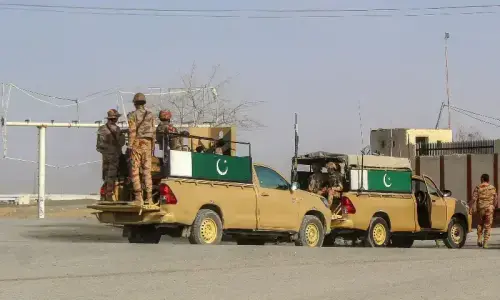
The military also cannot conduct overt, hostile action in Pakistan, where the drones have been most active and are practically the only means the United States has to attack terrorists and militants in remote regions. Yes, the pace of strikes has significantly decreased since the 2010 peak of an estimated 122 unmanned attacks in Pakistan. But the drones are most certainly still flying.
Last week, a drone strike killed the leader of the Pakistani Taliban, Hakimullah Mehsud, who had a $5 million US bounty on his head for his involvement in a 2009 attack in Afghanistan. Over the summer, a spate of drone strikes killed a dozen militants in Yemen.
Keeping the drones with the CIA also offers legal cover for drone strikes, former officials argued. By law, the military is not supposed to conduct hostile actions outside a declared war zone, although special forces do so on occasion acting at the CIA’s behest.
By arrangement with The Washington Post/Bloomberg News Service