0
0
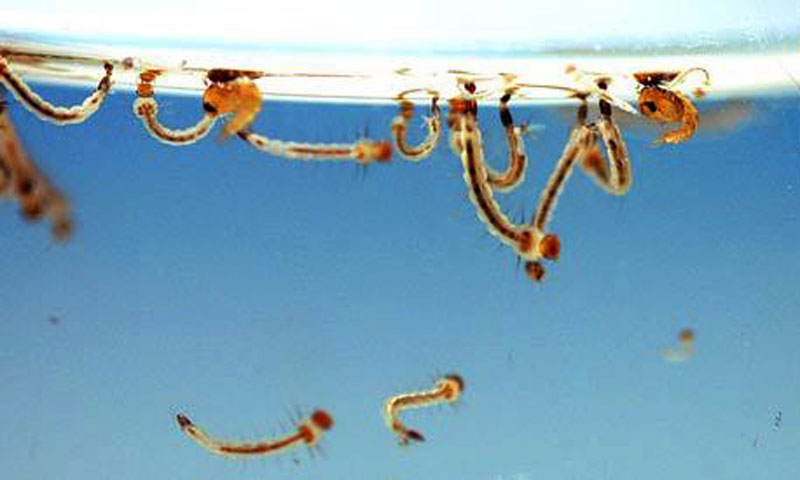

ISLAMABAD: Larvae-eating guppy fish can help combat the spread of dengue, a mosquito-borne illness that claims 20,000 deaths worldwide every year, according to a trial study.
The Asian Development Bank and the World Health Organisation sponsored a study that was carried out by the governments of Cambodia and Laos.
The community-based project resulted in a sharp decline in mosquito larvae in water storage tanks after the tiny fish were introduced. Guppies eat larvae that grow into mosquitoes, which in turn bite humans and transmit dengue.
The ADB had provided financing of $1 million for the project. “This is a low-cost, year-round, safe way of reducing the spread of dengue in which the whole community can participate,” said ADB health specialist Gerard Servais.
“It offers a viable alternative to using chemicals and can reduce the scale of costly emergency response activities to contain epidemics.”
Dengue causes severe joint and muscle pain, headache, high fever and rashes and is fatal in a small proportion of cases, in particular if not diagnosed and treated early. Outbreaks of the illness not only affect families with sudden health care costs and loss of incomes for adults put out of work, but also impact health services, businesses and tourism, straining government budgets because of unplanned spending on large-scale emergency response measures. Currently there is still no vaccine or specific medicine to treat this viral disease.
Around 2.5 billion people worldwide are at risk of contracting dengue, more than 70 per cent of whom live in Asia and the Pacific. Pakistan is among the countries where dengue has become a public health issue. Punjab and Sindh provinces have been most affected by the dengue.
The study says that the threat of exposure to dengue-carrying mosquitoes is rising with uncontrolled urbanisation and a surge in the use of non-biodegradable packaging, which can act as a water reservoir for dengue mosquito breeding.
Dengue is spread by a specific mosquito that breeds readily in stagnant water, such as found in storage containers, flower pots and discarded tyres. The guppies are particularly effective in these settings, according to the study.