ISLAMABAD: The National Command Authority (NCA) decided on Thursday to further develop the country’s nuclear weapons programme for preserving “full spectrum deterrence” against any possible external aggression.
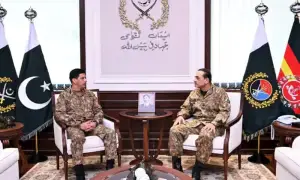
The decision was taken at a meeting of the National Command Authority — the principal policy making body on the research, development, production, use and security of the nuclear programme. The meeting was presided over by Prime Minister Nawaz Sharif.
This was Mr Sharif’s first session on the nuclear policy after returning to the prime minister’s office in June for a third term. The prime minister had in his second tenure rejected all international pressure and conducted nuclear tests in 1998 in response to Indian nuclear tests.
Volatile regional security situation and discriminatory policies within the non-proliferation regime were the determining factors in Pakistan’s decision on further strengthening its nuclear programme even though the country is facing a severe economic crisis and had only a day earlier got a $6.64 billion loan from the International Monetary Fund (IMF) to keep its economy afloat.
“Pakistan would not remain oblivious to evolving security dynamics in South Asia and would maintain a full spectrum deterrence capability to deter all forms of aggression,” a statement issued after the meeting said. It also described the nuclear programme as central to the defence of the country.
Further development of the nuclear programme implies that the perceived gaps in the programme would be plugged. The country has already been pursuing this track and has developed short-range and low-yield tactical weapons in response to India’s cold start doctrine.
Widening conventional arms disparity with India, which is driven among other factors by country’s fast deteriorating economy, pushed Islamabad to lower its nuclear threshold.
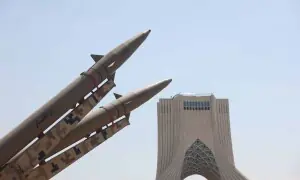
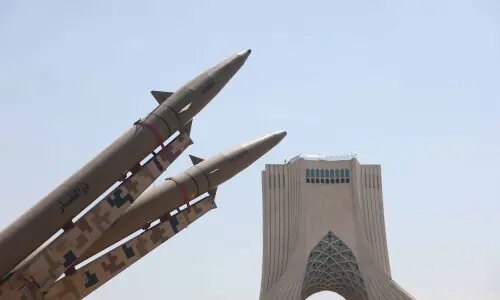
Introduction of new delivery systems — short-range missile NASR and air-launched cruise missile Raad; miniaturisation of war heads; are some of the clear pointers towards Pakistan’s increased focus on developing its nuclear programme.
However, while taking the categorical decision of continuing with the development of the programme, which always raises alarm bells in the West, the NCA reiterated commitment to being a responsible nuclear state, avoiding arms race, remaining engaged with the Nuclear Security Summit process and playing its part in the global non-proliferation regime. Moreover, the offer of sharing its expertise under IAEA safeguards and training personnel on nuclear security were renewed.
Criticising discriminatory trends in non-proliferation regime, particularly the expected entry of India into export control regimes, the NCA said such moves could imperil Pakistan’s national security, besides adversely affecting the global non-proliferation initiatives.
Pakistani strategists fear that India’s entry into Nuclear Suppliers Group (NSG) through a country-specific exception would lead to it being denied high technology even for peaceful purposes.
The NCA reminded that Pakistan possessed all credentials for qualifying for access to civilian nuclear technology and becoming a member of the multilateral export control regimes including NSG on non-discriminatory basis.
Restating the country’s opposition to Fissile Material (Cut-Off) Treaty, the NCA said Pakistan would remain opposed to any arms control arrangement that is detrimental to its security and strategic interests.
Pakistan has since 2009 opposed start of talks on FMCT at the Conference on Disarmament. Islamabad’s position has been that it would sign Fissile Material Treaty if the countries with fissile material reduce their stocks to a proportional level before setting the cut-off date instead of agreeing on existing stock levels which put the country in a disadvantageous position.