New media arts and multidisciplinary forms require new ways of thinking in and about the arts. This is the game changer sensibility that young artists today are embracing to bring fresh perspectives to current issues.
Taqi Shaheen, a bright young visual artist and documentary filmmaker has caught the public eye with his unusual approaches and novel ideas relevant to current issues. His practice is centered on audiovisual installations, paintings, films and performances and his specialties include conceptualisation, production and post-production for: commercials, research-oriented educational documentary films, short films, animation, puppetry and theatre projects.
During his current exhibition, Dhandli: Enough is not Enough, at The Second Floor, Karachi, he answered questions relating to his work and the photo mosaic experiments he has carried out.
Can you define your work philosophy considering your professional practice straddles several related but independent art genres?
With each work I do, the idea is to connect and play a video-game like experience with the viewer through a diverse pool of images. Through this, the viewer either resists or plays along through these familiar and unfamiliar images. The viewer wrestles and juggles with the visuals and that’s the point where I feel magic happens.
It’s a mutually shared experience and to attain that I like to converge various genres which gives me horizontal access for visual playfield rather than a singular or vertical access which I find too limited for experience sharing. I enjoy translating visuals into these video games like experiences which I expect to be replayed.
What is the premise of Dhandli with special reference to the Enough is not Enough aspect of the show?
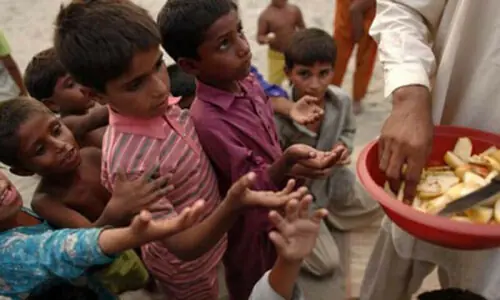
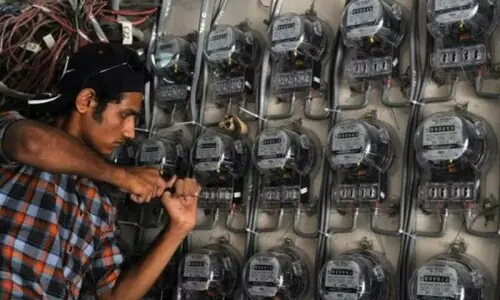
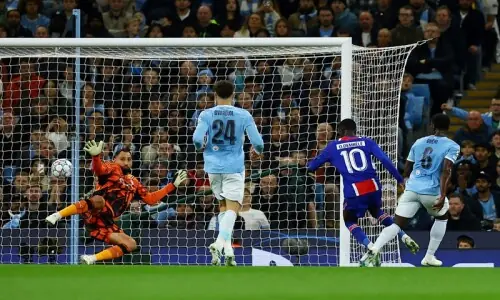
We do or face dhandli in our lives, which for some is never enough. Neither for those who are experiencing it nor those who are making them experience it. And it’s not just limited to elections or a cricket match, but something bigger, which is being unfair to others. I thought of what it would be like to have visual interpretation of dhandli through graffiti and popular images and started to develop the works.
I felt that the images of empty roads on strike days, voters aimlessly waiting in lines, Rangers and police on the streets, and even images of Kareena Kapoor on the billboards fit perfectly as images of dhandli experienced by the people. All the works have a pattern and it expands and repeats itself as if the repetition is not enough either.
Do you feel understanding and appreciation of new media arts is increasing in our milieu beyond the immediate art circles?
New media arts are certainly catching up and quite a lot of fresh graduates and mid-career artists are embracing new media arts. However, there is a difference between using it as a medium or a shortcut. For some upcoming artists, it’s the shortcut to avoid laborious process of drawing, painting and sculpting which, in my opinion, is wrong. There are no shortcuts.
Viewers are beginning to feel the change and appreciate the new visual vocabulary being used by the artists. Because of other artists who are consistently using new media arts, like Rashid Rana and Bani Abdi the perception will change soon. But for that, I really think artists should exhibit more often to make these art forms less alienated and more accessible for local audiences.