4
4


WASHINGTON: Declaring America at a ''crossroads'' in the fight against terrorism, President Barack Obama on Thursday revealed clearer guidelines for the use of deadly drone strikes, including more control by the US military, while leaving key details of the controversial program secret.
The president also announced a renewed push to close the Guantanamo Bay detention center in Cuba, including lifting a moratorium on prisoner transfers to Yemen.
However, shutting the prison will still require help from Republicans reluctant to back Obama's call to move some detainees to US prisons and try them in civilian courts.
Obama framed his address as an attempt to redefine the nature and scope of terror threats facing the US, noting the weakening of al-Qaida and the impending end of the US war in Afghanistan.
''Neither I, nor any president, can promise the total defeat of terror,'' Obama said in remarks at the National Defense University.
''What we can do, what we must do, is dismantle networks that pose a direct danger, and make it less likely for new groups to gain a foothold, all while maintaining the freedoms and ideals that we defend.''
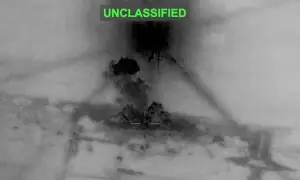
Since taking office, Obama's counterterrorism strategy has increasingly relied on the use of strikes by unmanned spy drones, particularly in Pakistan and Yemen.
The highly secretive program has faced criticism from congressional lawmakers who have questioned its scope and legality.
The president, in his most expansive public discussion on drones, defended their targeted killings as both effective and legal.
He acknowledged the civilian deaths that sometimes result, a consequence that has angered many of the countries where the US seeks to combat extremism, and said he grapples with that trade-off.
''For me, and those in my chain of command, these deaths will haunt us as long as we live,'' he said. Before any strike, he said, ''there must be near-certainty that no civilians will be killed or injured, the highest standard we can set.''
Ahead of the address, Obama signed new ''presidential policy guidelines'' aimed at illustrating more clearly to Congress and the public the standards the US applies before carrying out drone attacks.
Officials said the guidelines include not using strikes when the targeted people can be captured, either by the US or a foreign government, relying on drones only when the target poses an ''imminent'' threat and establishing a preference for giving the military control of the drone program.
However, the CIA is still expected to maintain control of the drone program in Yemen, as well as in Pakistan's tribal areas, given the concern that al-Qaida may return in greater numbers as US troops draw down in Afghanistan.
The military and the CIA currently work side by side in Yemen, with the CIA flying its drones over the northern region out of a covert base in Saudi Arabia, and the military flying its unmanned aerial vehicles from Djibouti.