0
0

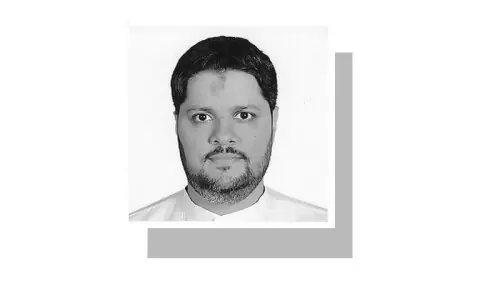
LAHORE, Jan 25: Mohammad Saad breaks into sobs and gut-wrenching moans when he details six years’ humiliation, interrogation and ill-treatment under US orders in Egypt, Afghanistan and Guantanamo Bay.
At 31 he walks with a limp and needs a stick to cross the drawing room of his brother’s palatial villa in Lahore.
“It’s too painful, it’s too deep, it’s too dark and fills me with sadness... They did everything they could to destroy me when I was completely innocent.”
Since returning home in 2008 – six years after he was arrested and years after US investigators said they had no case against him – Saad has undergone one operation to stem infection in his left ear and is waiting another.
Unmarried and an orphan, with little hope of a normal life, he is unmoved by US President Barack Obama’s widely feted decision to close Guantanamo Bay, ‘secret’ CIA detention facilities and outlaw torture.
“Obama’s decision to close Guantanamo Bay is a mere whitewash. Obama has to apologise to the prisoners, to their families and their societies, Saad said.
“They have to apologise to the Muslim world and a whole generation. That’s the least he could do... He should pledge these atrocities will never be repeated and compensate those who suffered any kind of torture.”
Some outgoing US administration officials rejected accusations that tactics amounted to torture and argued that US interrogation techniques such as “waterboarding” or simulated drowning yielded useful intelligence.
Saad says he was 24 years old, a lecturer in Islamic studies and a sought-after reciter of the Holy Quran visiting family in Jakarta when Indonesian agents acting on US orders arrested him before dawn on Jan 9, 2002.
He was kept without food and water, then handed over to an Egyptian at the airport on Jan 10 to board a special plane.
“They stripped me and started beating me, kicking me in the face but asking no questions. It was utter humiliation. They shackled me from my neck to my knees and took me to the plane. An American official was also there.
“During the flight they slapped me, kicked me and wouldn’t let me use the loo. After a while they gave me a bottle and said I can urinate in that. I arrived in Cairo on January 11.”
In Egypt, he says he was incarcerated in an underground cell for 92 days, his knees and back given electric shocks, and interrogated by Egyptians about Washington’s most wanted man, Osama bin Laden.
Well educated, the son of an Islamic scholar and a master of nine languages, including English, Saad has to strain to hear during an interview with AFP.
In April 2002, he was flown to Bagram, the US military-run prison in Afghanistan, where he was stripped, shackled and handcuffed.
“After a few rounds of interrogation I was put in solitary confinement for seven months and on March 23, 2003 they transferred me to Guantanamo Bay.”
Saad says he passed a polygraph (lie detector) test. “They didn’t let me sleep, (were) moving me from one cell to another with hoods and (my) legs tightly shackled. My legs started bleeding.”
“I went on hunger strike three times. They said they would give me treatment if I cooperated. I was suffering. I was in terrible pain. There was an abject sense of humiliation. I wanted to end my life but I could not.”
Saad denies ever being affiliated to Al Qaeda or extremists, or visiting Afghanistan.
“They wanted me to confess that I met Osama bin Laden and I went to Afghanistan. I never met him, I never went to Afghanistan,” he says breaking into loud moans and sobs.
In 2004, he was told that the US government had no case against him and that he would be freed. But he was released three years later.
Pakistani security officials say ex-inmates are subject to strict police vigilance and most of the more than 60 Pakistanis who have been released are monitored by law-enforcement agencies. “Can they (the Americans) return those seven years? Never. They have destroyed so many lives. They have turned intelligent, healthy human beings into vegetables,” says Saad.
—AFP