0
0

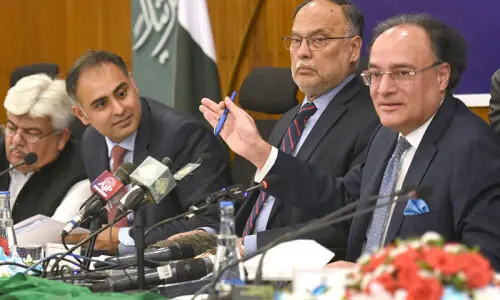
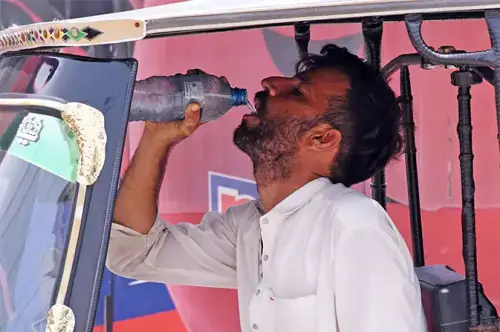
ISLAMABAD, April 21: National Assembly members from both the ruling coalition and opposition on Monday bemoaned dull days and darker nights because of power cuts as they waited for the approach of a promised new dawn for the judiciary.
There were blames galore from ruling coalition members for what they saw as a gross neglect by the previous government of the country’s growing energy needs. The lower house resumed a debate on the water and power crisis after skipping it over the past week.
But legislators from both sides of the house called for urgent planning to find both short- and long-term remedies, such as looking for alternative sources like solar and wind energy, setting up coal-fired plants and build small dams as well as planning big dams.
The debate was initiated 10 days ago at the start of the first regular session of the house, but was overtaken by other issues like the equally troubling food shortages and law and order.
Its resumption on Monday came on the first day of what is set to be the last week of the present session when the government has promised to have a resolution passed by the house for the restoration of about 60 judges of superior courts.
Parliamentary sources said the resolution, as promised in the Murree Declaration, would be moved before the conclusion of the present session on Friday, though some speculated the session could be prolonged if any hitch arose.
But despite power cuts, house members seemed more interested in the fate of the judges who could reoccupy their benches in the Supreme Court and the four provincial high courts and of those now running these courts after taking oath under the Provisional Constitution Order.
At one point the new assembly seemed to be losing quorum for the first time after the break for Maghreb prayers, while the prime minister and some key ministers were out of the chamber but the ruling coalition managed to collect enough strength to carry on the debate before the house was adjourned until 4pm on Tuesday.
PPP member Farzana Raja called load-shedding the result of a ‘big crime’ committed by the previous government by not adding anything to the country’s power-generating capacity. She promised the present government would solve the problem in three years.
She proposed domestic production of energy-saver bulbs and their use by all government offices.
Humayun Saifullah, of the Pakistan Muslim League-Q, complained that the North West Frontier Province was not getting its full dues of net profits from electricity produced there and called for charging uniform rates throughout the country.
“We produce electricity but the button is with Wapda in Lahore,” complained an Awami National Party member, Haider Ali Shah.
“My people voted for my party to get rid of President Musharraf and load-shedding.”
A PML-N member, Justice (retd) Iftikhar Ahmad Cheema, called for ‘revolutionary steps’ by the government to overcome the crisis and said the PPP should agree to the construction of Kalabagh dam.But the dam plan was opposed by two opposition members from Sindh, Mohammad Salahuddin of the MQM, and Nasrullah Bijrani.
A PML member from Chitral, Shahzada Mohiuddin, pleaded for political stability to undertake big dams and called for building small dams in the north of the country.
PML-N member Khurrram Dastagir, an electrical engineer, said while the country had to build large dams, nuclear power plants could be a “shortest-term” solution besides coal- and gas-fired plants and small hydel projects.
PPP members Robina Sadat Qaimkhani and Mehrin Anwar Raja suggested extension of load-shedding to the official residences of the prime minister and ministers and parliamentary lodges as a mark of solidarity with common people.