0
0

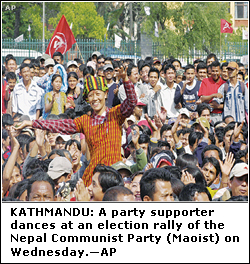 KATHMANDU: Nepal's once shadowy Maoist leader warned on Wednesday that the former rebels would not accept the results of upcoming crucial polls if they were marred by corruption.
“We won't accept the results if we sense that there is any conspiracy or unfair activities towards us during the election,” Prachanda told a crowd of around 3,000 supporters in capital Kathmandu.
On April 10, Nepal is due to elect a body that will formally abolish the world's last Hindu kingdom and rewrite the Himalayan country's constitution.
The elections are a key element of the landmark 2006 peace deal that ended a bitter civil war and brought the Maoists from their jungle and hill strongholds and into government in Kathmandu.
Ananta, the deputy chief of the Maoist's People's Liberation Army, said the former rebels would not accept the results if “we find that 'booth capturing' has happened, that voters have been paid and that people have been forced to cast their votes for a particular party through fear.”
Nepalese human rights groups monitoring election preparations have said that the country's three main parties — the Nepali Congress, the Communist Party of Nepal (Unified Marxist-Leninist) and the Maoists — have all been involved in violent clashes during campaigning.
The ultra-leftists are confident of victory in the polls.
“My election campaign has shown the majority of people across the country are in favour of us,” Prachanda, whose nom de guerre means “the fierce one” told the crowd at an open air theatre in the centre of Kathmandu.
But Rhoderick Chalmers from the conflict-prevention organisation International Crisis Group said that Prachanda's claims of victory were a common pre-poll tactic.
“You have to say this when you are campaigning,” said Chalmers.
“The Maoists will not do as well as they claim in public, but they are not going to do as badly as their critics say,” said Chalmers, the Nepal country director for the ICG.—AFP