



 0
0

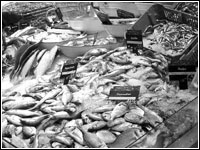 THE country’s main source of fish is the Indian Ocean. More than 100 species of fish exist with some 25 having commercial value Production of fish, both inland and marine, in 2006, was about 6,05,000 tons. Fish is a valuable source of foreign exchange earnings.
Other sources of fish are small rivers, dams, barrages, lakes, reservoirs, ponds and canals widely spread all over the country. In these areas of both sweet and brackish water fish of better varieties can be stocked. Facilities for breeding fish, improving its supply, and dissemination of technical know-how for improving its production and quality is being strengthened.
Fish is considered to be the best source of animal protein for human beings. However, Pakistan is one of the protein-deficient countries. Its per capita fish consumption is about 1.95 kg which is very poor as compared to other nations’ consumption. In Europe the per capita fish consumption is 20 kg and in Japan 64 kg.
Of the total marine fish harvested, about 42 per cent is consumed locally in the form of fresh fish or fish meal. The marine fish are disposed of or marketed as fresh, frozen or canned for local consumption. Fish protein has a high biological value. It contains variable quantities of calcium, phosphorus, fat and other nutrients important for human health and growth. Fish oil is a rich source of soluble fat. Excessive use of fish generally lowers blood cholesterol level and reduces risk of coronary heart diseases. Omega 03 found in fish or fish oil lowers blood pressure, blood become less sticky, and less likely to form clots.
Almost all fish such as salmon, herring, sardines, cod, lobster, tuna, sole, mackerel, crab, sprats, haddock, prawn, pilchards, oysters, plaice etc, contain Omega-3. Fish products are also used in the preparation of anti-viral, anti-biotic and anti-cancer agents. Fishmeal is used in manufacturing poultry feed, fish manure for fertiliser, fish oil as medicine and in the production of printer ink.
The country is endowed with large coastlines encompassing the most productive ocean in the world. The geographical setting is also ideal for the development of fish industry. There appears to be good prospect for further development of inland fish production, especially in the man-made reservoirs, waterlogged areas and the Indus delta region. Meaningful cultural activities, improved gears and fishing techniques are needed to boost this sector to further strengthen the economy.
A properly developed fish industry can be helpful in increasing exports and earning sizeable foreign exchange. Development of fishery can provide employment and growth opportunities to many small and middle-size communities living along the coastlines. A major factor in the development of modern fish industry is the establishment of adequate hatcheries and nurseries for various varieties of fish, and setting up of processing plants, storage and preservation facilities, and adoption of marketing techniques.
In addition, a properly developed fish industry requires the assistance of a host of allied industries such as manufacturers of gears, boats, engines and related items. Fisheries law and regulations should be implemented to protect the resources from over exploitation. Commercially important marine and shore animals and plants require special sanctuaries under the direct supervision of scientists. Whatever the technical, financial and research inputs, the desired rate of expansion of fisheries production and utilisation can be achieved only if due attention is paid to the intensive problem-solving research programmes.
Proper liaison may be established among fishery-related organisations like Parc, Wapda and the PCSIR on the one hand and the federal and provincial fisheries departments on the other. In view of the huge resources available, during the year 2006, out of total production of 604,900 metric tons, 425,000 metric tons was provided by the marine sector, whereas the contribution of inland sector was 179,900 metric tons. In marine sector, out of total production of 425,000 metric tons, 285,000 metric tons was contributed by Sindh coast whereas that of Balochistan was140,000 metric tons.
Different organisations have planned to establish research projects covering both marine and fresh water fisheries and allied aqua culture. Major emphasis has to be put on extensive surveys of fisheries resources conservation and fauna of mangrove forest wetland, post harvest deterioration of marine shrimps, fish and shellfish resources of coastal areas, breeding biology and seed production of commercially important freshwater fishes, feed formulation for fish culture, freshwater prawn culture, trout fish farming and fisheries management.




























