



 0
0

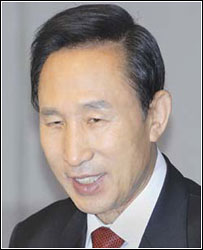 SEOUL: South Korea’s delicate relationship with the reclusive North is unlikely to see any major changes, analysts said on Thursday, despite its next leader signalling a tougher line immediately after being elected.
Lee Myung-Bak, known for his conservative views on the North, made clear in his first press conference as president-in-waiting that he would press the communist country on its human rights record, and to get rid of its nuclear weapons.
“The issue of human rights is an issue we cannot avoid,” Lee said, accusing the liberal governments of the past decade of doing just that.
“In inter-Korean relations, we should not shy away from criticism. Caring criticism will even make North Korean society healthier,” he added.
However analysts say Lee will take a pragmatic approach to rapprochement, which is now at a critical juncture. International negotiators waiting to see whether the North will honour a pledge to scrap all its nuclear programmes.
“There will be no drastic change in inter-Korean relations because North Korea is reluctant to destroy a peace mood created by the summit in October,” said Dongguk University professor Koh Yu-Hwan.
“Lee will seek a minor change in North Korean policy after his inauguration, but he has no choice but to improve relations if Pyongyang extends an olive branch.” Lee urged the impoverished state fully to scrap its nuclear weapons programmes in return for major economic aid from Seoul and future prosperity.
Rightwingers want South Korea to stop unlimited aid to North Korea, criticising outgoing President Roh Moo-Hyun for giving too much while gaining little in return.
Roh and his predecessor followed a “sunshine” engagement policy despite their neighbour’s missile launches and nuclear test.
South Korea abstained last month when a UN committee voted on a resolution pressing North Korea to improve its human rights.
The North’s leader Kim Jong-Il and Roh, at the rare summit in Pyongyang, agreed on sweeping reconciliation projects. Lee has said his government would review them all.
Lee Chung-Min, international relations professor at Yonsei University, said Lee’s government would not discount everything that the past two liberal presidents had done but there would be “a thorough review” of policy.
“It will continue humanitarian aid, particularly for those who deserve it the most,” Lee said.
“But there must be much more stringent monitoring in place because there are informal reports that up to 20-30 per cent of food aid gets diverted to the armed forces.” Describing his policy as pragmatic, Lee Myung-Bak said the North’s decision to completely scrap its atomic weapons “would initiate real and full-scale inter-Korean exchanges”. He said he would persuade Pyongyang that the way to maintain the regime and look after its people was to denuclearise, and Seoul would play an active role in six-nation negotiations on scrapping the programmes.
The North is currently disabling its atomic plants but has not yet made a full declaration of nuclear activities, as required under a six-party pact.
During his campaign Lee had said he would link aid more closely to the North’s nuclear disarmament.“The end result of the Sunshine Policy of the past 10 years is a nuclear-armed North Korea,” Lee had said. “Therefore, the priority must be how to disarm the North.” But he also promised to work to increase its per capita income to $3,000 within 10 years through economic reform, in cooperation with the international community.
Chun In-Young, political science professor at Seoul National University, said the new government would likely continue seeking peace with the Pyongyang regime, “but it will be less lenient towards it”. There would be more objectivity and reciprocity, Chun said.—AFP





























