



 0
0

 ABOUT two-thirds of the domestic requirements of edible oil are met through imports. Its import increased from 1.197 million tones in 2001-02 to 1.695 million tones during 2005-06.
A huge amount in foreign exchange is spent every year on imports, which can be cut significantly by enhancing domestic production of edible oil seeds. And the Potohar area has great potential for growing edible oil crops.
Agriculture in Potohar area is totally dependent on rainwater. The insufficient and uneven distribution of rainfall increases the risk involved in crop production. Water scarcity coupled with land fragmentation has lowered farmers’ income from wheat to such an extent that they consider it a part time business only.
However, there is a large contingent of oilseed crops that have proven to be promising in the area, which include rapeseed, mustard, groundnut, sunflower, sesame and olive.
It is desirable to look at the Potohar agriculture from entirely a new perspective, just like rice zone and cotton zone, an ‘edible oil zone’ can be created in this area. The only need is to install oil expellers and processing units for brassica, groundnut, sesame, sunflower, and olive in Potohar.
Such a move would help boost oilseed production and help farmers make more money out of their lands, and reduce the import bill.
While some of the oilseed crops are grown in the area, these cannot compete with common cereal and cash crops for lack of market. All efforts to proliferate oilseed crops will go waste until farmers find better market of their produce, which can be provided by installation of oil expeller. The success stories can be seen in case of sugar mills. Where there is a sugar mill, farmers prefer to grow sugarcane, where corn-processing units have been set up, farmers have started growing more corn.
Factories themselves ensure production of the required crop by providing incentives to the growers so that they may not fall short of raw material.
Rapeseed and mustard have been grown for oil production in Potohar for years. However, the oil was not fit for human consumption because of its pungent smell and bitter taste due to presence of toxic compound called erucic acid.
Recently, cultivars named canola have been evolved whose oil is fit for cooking and human consumption. Rapeseed and mustard have direct competition with wheat, as both are grown in the same season.
Farmers prefer to grow wheat, as it is the staple food and subsistence crop. Rapeseed monoculture on large blocks of five to 10 acres is rare. It is now diverging mostly into intercrop with winter fodders and wheat and cash crop in ‘Zaid Kharif’ season.
Peanut is an important oilseed crop of the dry farming system. Its oil is edible and serves as excellent cooking oil. The nuts (un-shelled) have 33 per cent oil. It is free of toxic compounds and contains no linolenic acid, which causes oxidative rancidity (off-flavour) in other vegetable oils.
Groundnut requires light soils, which is necessary for the penetration of the flower pegs into the soil for pod formation. Light soils also offer easy digging and minimum harvest losses. Due to this specific requirement, its cultivation remained confined to sandy and light soils, which are abundant in Rawalpindi division.
Sunflower seed contains 25-32 per cent oil. It was introduced in early sixties as an oil crop. Its expansion remained restricted due to the absence of systematic follow up and adequate market mechanism.
Sunflower was grown on maximum area of 144,190 hectares, during 1998-99, with 194,540 tons production. During 2002-03, it was grown on an area of 107,720 hectares producing 128,530 tons seed.
Sunflower oil is comparable to olive oil. It is rich in linoleic acid, the essential fatty acid. Hence it is valuable cooking oil. It can be successfully grown in summer on fallow lands.
Safflower is a low moisture-loving crop and therefore, can do better in rain-fed areas and on residual moisture. It has deep roots and can meet its water requirements from zones as deep as two to three meters.
Because of the same reason, it can help reclaim soils with high water table. However, the spiny nature and long maturing period of the crop, subdue its promotion and acceptance even in the presence of such strong advantages. Mechanisation in the harvest or production of new spineless varieties can help to overcome this constraint.
Sesame is one of the most ancient oilseed crop grown in the sub-continent. It requires more heat and light but is sensitive to low temperature.
Its seed contain 45 to 55 per cent oil. The oil is of good quality, odourless and not liable to become rancid due to the presence of sesamolin in the oil, which on hydrolysis yields a powerful antioxidant sesamol.
The most attractive trait in sesame is its very short duration, besides its tolerance to marginal lands. Therefore, it has large scope for expansion in rain-fed areas.
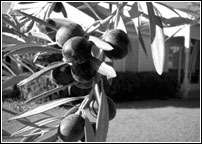
Last but not the least, olive, a popular oil crop of the world, is well known for its cooking oil. The domesticated varieties of olive can be planted successfully in the Potohar area.




























