KARACHI, Sept 26: Work on the relocation of the Quran and Islamic galleries in the National Museum is going on in full swing, it is learnt. According to sources the two-year (2007-2008) Rs12 million project has been launched to protect and re-open one of the most popular galleries of the museum, the Quran Gallery, which had remained closed for over a couple of years after a severe termite attack.
Under the project, termite treatment will be carried out on the entire National Museum building, which has remained under constant termite attack and despite the fact that anti-termite treatments were carried out many times in the past, the menace resurfaced soon afterward.
Under the project, the Quran Gallery, at present located on the ground floor, is being shifted to the Islamic Arts Gallery located on the first floor, as the ground floor is said to be more vulnerable to termite attacks.
The exhibits, rare copies of the Quran, have been taken out from the Quran Gallery and shifted to another room for safekeeping for the time being and after the exhibits from the Islamic Arts gallery, located on the first floor, are taken out and shifted, the copies of the holy book will be relocated and the Quran Gallery will be reopened, by the middle of next year.
Responding to Dawn queries, project director Mohammad Shah Bokhari said that when the fixtures etc were removed from the Quran Gallery, it was revealed that it was still under termite attack, which was surprising as hardly a few months back anti-termite treatment had been carried out under the supervision of museum superintendent Makin Khan, and it was surprising that termites had reappeared so soon. He said he had reported the matter to the high-ups and was also in contact with Mr Khan in that regard.
Anti-termite treatment
The sources said that the contract to carry out the anti-treatment work a few months back was given without following the rules to a favourite NWFP-based firm that carried out the work in a few days and the way the work was done it was not surprising that termites had reappeared so soon.
Responding to queries, Mr Khan said that the anti-termite treatment was carried out by Peshawar-based Pak Khyber Zarai Centre, whose consultant Dr Saleha Sattar was an expert in anti-termite treatment.
He said he had not called tenders for the project as anti-termite work was of a specialized nature and there were not many firms operating in the field. He said he was not satisfied with the work being carried out by such firms in the city so he had awarded the contract of about half a million rupees — made available to him by the department from the National Heritage Fund -- to the PKZC. Even PC 1 of the anti-termite treatment project was not prepared, he added.
He said he was satisfied with the anti-termite treatment they had carried out in the Quran Gallery. Besides, the firm had guaranteed that termites would not reappear within five years. If there was any problem, the firm would be called, Makin Khan added.
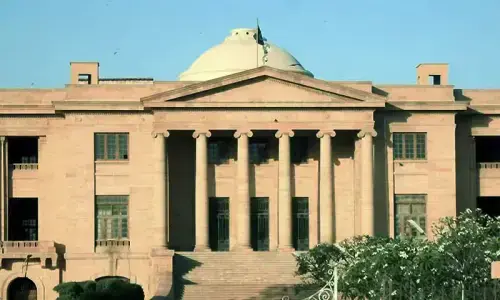
The sources said the National Museum was shifted from the Frere Hall to its present premises in the 1970s in the Burnes Gardens having old trees, some of which were affected by termites. Now though anti-termite treatments had been carried out many times, termites reappeared proving that the people carrying out the treatment had not been able to destroy the termite queen -- a must to control the menace from reappearing.
The National Museum has over 300 copies of the Quran, out of which over 50 rare manuscripts are on display at the gallery, established in the large hall half of which was under the termite attack forcing the administration to relocate the copies of the holy Quran. The sources said that the museum had organized the Quran Gallery with the financial assistance from a Japanese firm in 1985 under which special metallic showcases were provided to safely keep the exhibits.