



 0
0

 FROM once the largest ship-breaker in the world, Pakistan is now wanting to be a significant ship builder, and we are seeking to do that not through one shipyard but two large ones.
Simultaneously the automobile industry in Pakistan has set the target of manufacturing half a million cars and one million motorcycles by 2010. That is three years from now and that would amount to more than doubling the existing capacity.
Can we really do that when our basic steel production capacity is one million tones? In addition we will be producing a number of buses and trucks to carry our goods.
Automobile imports within first nine months of the last financial year exceeded one billion dollars and if the new target is to be achieved, the automobiles imported in parts will exceed two billion dollars and we are planning that at a moment with a large trade deficit and an external account deficit of over $7 billion.
The capacity of Pakistan Steel would have been increased eventually to three million tones if the Supreme Court of Pakistan had not called off the privatisation of Pakistan Steel saying it was done “in indecent haste”. While the Pakistan Steels eventual output is to be three million tones, the current steel consumption of the country is 3-4 million tones.
World steel prices have been rising very high in recent months and the government has been adding to the taxes on it so the domestic price of steel has gone very high.
Do we have enough of technologies and well-trained technicians to achieve such large targets in such a short time. A manager of a Japanese automobile company in Karachi asks “what do I do with a worker on the assembly line if he can not read the manual”? Evidently we need far more educated and trained technical workers who can adapt to new technologies quick.
We are not talking here of imported or foreign-assembled cars in large numbers, particularly the luxury models but of locally assembled cars---in fact the local manufacture of the entire car along with engines.
Because of defects in locally manufactured cars, which get corrected subsequently, there is a large preference for foreign-assembled cars and even old foreign-assembled cars. The locally assembled cars have yet to become perfect to the satisfaction of the Pakistani customer who pays a heavy price inclusive of hefty duties.
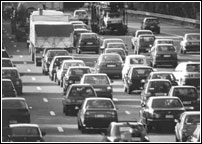
When we get half a million cars and one million motorcycles on the road, where the roads for them? The roads are already congested and clogged by existing automobiles. Where is the parking space in major cities?
Setting large targets is easy and very alluring, but to realise that is tough and demands a great deal of exertion.
So not every developing country has opted for manufacturing automobiles. India is different and has a long history of automobile making. Malaysia under Mahathir Mohammed tried to make its own car but had to go through too many exertions and sacrifices.
When we double the number of cars we produce, we would need far more petrol, engine oil and gas. Do we have enough of that when our own oil meets only 20 per cent of our needs? World oil prices have hit $84 a barrel and the external account deficit of the country cannot go on rising.
When it comes to motorcycle production, the imported vehicles have resulted in the shutting down of many local factories. The Chinese motorcycles have a dominant share of the market and when within five years the trade between China and Pakistan touches $15 billion, most of the motorcycles will be of Chinese origin. Meanwhile, their prices would have come down and their quality improved because of the growing Chinese technology.
We have tried to attract more western car manufacturers along with those from East Asia or Japan and Korea. We tried to get the Daimler’s Mercedes to manufacture in Pakistan beginning with trucks but the Mercedes eventually dropped the project.
Following the rise in the price of cars, and preference of foreign-assembled cars, we allowed five-year-old cars. Many cars came in and so the age of the car was reduced to three years. Over 13,000 five-year-old cars are lying in Japan, as only three-year-old cars can be imported to Pakistan after the current budget. The disadvantage of importing foreign assembled old cars is that we need to import spare parts soon to repair them and the process can become too costly.
While the high-income groups prefer to import luxury cars and the low-income group old foreign assembled ones, public transport is receiving little attention. Consequently the roads are clogged by luxury cars and high-priced vehicles, the workers find it difficult to reach the place of their work and return home. And the transport costs a great deal.
It has become easy for the middle-income group to buy new cars using bank loans which are offered in plenty. Almost every foreign and local bank is offering car loans which are secure as far as the banks are concerned and quite often no cash down payment is essential.
Too much petrol gets wasted by cars and public transport owing to traffic jams and this waste will become higher as the number of cars increases day by day.
A developing country with 160 million people, of whom one-third lives below the poverty line, are to adopt a policy primarily aimed at helping the low-income group instead of catering to the needs of the rich and the very rich who can easily avail a car.
We should have a proper public transport policy in which the waste is cut to the low and the transport is really helpful to the people. The index of success of the economic policy is not the number of vehicles that the country produces, but how helpful is the policy to the low income groups who are to move from homes to the factory and back to their place of residence.




























