0
0

KARACHI, April 14: The government plans to project an economic growth target of 7.5 to eight per cent in the next fiscal year 2007-08 as planners are pretty upbeat on economic performance during last four years when an average of 7.5 per cent growth is said to have been maintained.
An official document, circulated for the National Economic Council (NEC) meeting for a mid-term review of the national economy, declares “prospects for sustained high economic growth in 2007-08 would remain excellent’’ as there are evidences to show a strong growth in domestic and foreign direct investment, strong performance of agriculture, the manufacturing and the services sector.
The NEC was earlier expected to meet on March 27 but its meeting was put off to April 12. But then the meeting has again been put off for an indefinite period. The NEC is the supreme economic body of the government, headed by the prime minister, and includes several federal and provincial ministers and top bureaucrats.It sets target of economic growth for the budget and makes a mid-term review, sometimes late January or early February. This year, the mid-term review by the NEC is far behind the schedule.
Officials do not give any reason for this postponement of the NEC meeting, but obviously the government appears to have been bogged down by the situation created from the Presidential reference against the Chief Justice on March 9 and later developments at the Lal Masjid, Islamabad.
Barring these developments, the government is pretty upbeat on its economic performance as the official document reveals that final growth rate during last fiscal 2005-06 is now being estimated at close to seven per cent, instead of initial calculation at 6.6 per cent.
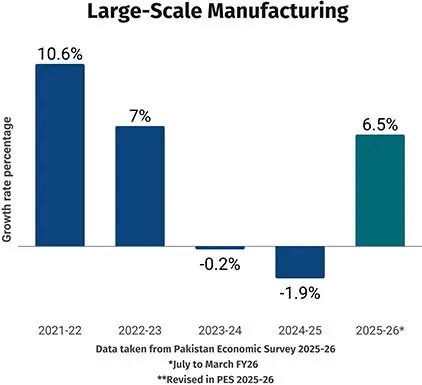
Officials hope economic growth to exceed seven per cent in the current fiscal year 2006-07. The large-scale manufacturing sector is expected to contribute 13 per cent, agriculture 4.5 per cent and services sector 7.1 per cent.
But the official document also speaks of disturbing trends of inflationary pressures and falling exports in the current fiscal year.
Based on July 6 to January figures, the food inflation is already in double digits 10.33 per cent. The Consumer Price Index in first seven months show an 8.14 per cent rise. It, therefore, proposes the need for a strong vigilance to contain money expansion to contain inflation within annual target limits.
In the current fiscal year, the money expansion has slipped out of control mainly because of bulging current account deficit. The annual credit plan for 06-07 projected current account deficit at $6.3 billion. But by mid-year in December, the current account deficit was $4.4 billion and indications are that it would be more than $7 billion at the end of the day.
“The only disturbing aspect of the current year’s performance is export growth which needs to be closely analysed for redressal of its problems as this is an important driving force of the country’s economy, having an impact on overall economic performance. Planners are preparing a strategy to push exports to attain 15 per cent of the GDP by 2013.
The document reveals Rs87 billion utilisation from Rs250 billion federal development programme. The PDSP showed a size of Rs385 billion that included Rs115 billion provincial ADPs. From Rs250 billion federal PDSP, the government released Rs99 billion by December 2006 from which Rs87.4 billion were utilised.