0
0

KARACHI, April 9: Even a highly competitive and organised industry in the US, the world’s biggest economy, has complained of facing insurmountable barriers in the Indian market giving a convenient excuse to Pakistan, which, in an official report, wonders the plight of the “much smaller economies of South Asia.”
“India’s tariff remains high, especially in the agricultural sector,” observes an annual report for the year 2006 of the United States Trade Representative (USTR) entitled “Significant Trade Barriers”.
The report reveals “The US producers encounter tariff and non-tariff barriers that impede their exports, despite the government of India’s economic reform programme in 1991.” It goes on to complain about the US textile industries’ concerns on “non transparent” application of tariff and taxes.
The US exporters consider reduction on relatively much higher tariffs on agricultural products, processed foods, beverages and nutritional supplements “negligible”. The US exporters blame Indian authorities of practising a non-transparent taxation and tariff system as information on taxes and tariffs are given in different documents and there is no single document for this purpose.
An official document of Pakistan’s commerce ministry has extensively quoted these observations of the USTR report to argue that there were innumerable tariff and non-tariff barriers, which obstruct flow of Pakistani goods import in Indian market and discourage Pakistani exporters.
No wonder then, India remains the single biggest beneficiary in trade with Pakistan and five other Saarc partners all along in last more than 20 years that now inhibits further expansion of trade.
In the year 2005-06 India posted gains of more than $500 million in trade with Pakistan and there are strong prospects that this trade balance in Indian favour will expand further in the current fiscal year.
Many businessmen in Dhaka and Karachi mention perpetual trade balance in India’s favour as the single biggest effective factor that is impeding growth of business in South Asia.
On Monday Pakistan cement industry reported encountering a problem at the Indian port when the first consignment reached there from Karachi. Details are not available but the manufacturers and exporters have despatched a team of senior executives to India to sort out the issue.
Local business sources say that according to Indian trade practices prospective exporters of certain selected products that include cement, gelatine, condensed milk, electrical appliances, mineral water, steel products, leather products, X-Ray equipments, dry cell batteries, thermometers, helmets and gas cylinders are required to obtain licences from the Bureau of Indian Standard.
In this process the exporters have to incur application charges and also have to pay for the inspection visits from India. Furthermore, licences are required to be renewed every year.
“This adds to the business cost, and hurts competitiveness in Indian market,” observed a local exporter to Indian market. In many cases, the Indian banks do not accept letters of credit issued by Pakistani banks in favour of general exporters,” he complained and hence in most of the cases payments between Pakistani exporters and Indian importers are settled through Asian Clearing Union, which adds to the transaction cost. The Pakistan government perceives this as a non-tariff barrier and has mentioned it as such in its official report.
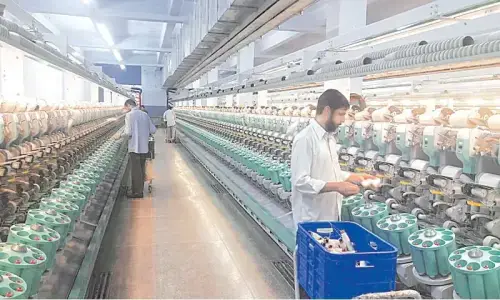
But what hurts the Pakistani business most is the Indian trade practices and rules on textile imports. The Indian trade bodies have recognised the advantage enjoyed by Pakistan in certain textile products. Indian officials have effectively converted these advantages into disadvantages for the Pakistani exporters by setting in place certain rules and practices.
For example textile consignments to India are tested for AZO dyes in local laboratories despite the fact that Pakistan has banned AZO dyes and there is no question at all of using these dyes by the local exporters. These tests in Indian laboratories take a minimum of seven days to three months and the cost incurred is almost 10 per cent of the consignment value.
Besides this, there are very many and multifarious rules and regulations that are applied on different consignments differently and put the exporters to difficulties and add to their cost of doing business with India.
Yet another complaint of Pakistan exporters is the different set of rules and practices by the Indian states for flow and consumption of imported goods that in many ways obstruct the exports from Pakistan.
The measures adopted by many Indian states to restrict use, consumption and sale of many agricultural goods and industrial products also discourage importers to seek supplies from Pakistan.
Similarly, the lengthy and cumbersome laboratory testing for a wide range of food products are also found to be discouraging Indian importers to place orders in Pakistan. There are restrictive measures on import of woollen textiles, pharmaceutical products, automotive vehicles, motorcycles, rough marble blocks, jute bags and a variety of consumer items, which exporters in Pakistan feel they have the capacity and potential but are unable to do because of the non-tariff barriers in India.
In the year 2005-06 Pakistan’s exports to India totalled $29,331 million. The single biggest exportable item to India was a petroleum refinery product worth $96 million. Total exports amounted to hardly $43 million while fruits and vegetables fetched $27 million.
Indian response to Pakistan’s objections on its non-tariff barriers is that these are not Pakistan specific and apply on global imports. Pakistan trades with India on a positive list of about 2,000 items, while India is insisting on a negative list so that it gets opportunity to export to Pakistan in wide area.