



 0
0

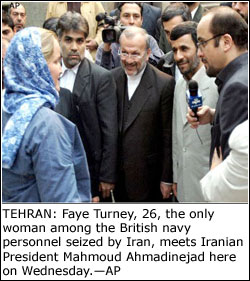 TEHRAN, April 4: Iran released 15 British sailors on Wednesday as a “gift” to the people of Britain in a dramatic end to a 13-day crisis that had triggered a new diplomatic standoff between Tehran and the West.
“Even though Iran has the right to put the Britons on trial, it has pardoned them to mark the March 30 birthday of the holy Prophet Muhammad (peace be upon him) and the upcoming Easter holiday. This pardon is a gift to the British people,” Iran’s President Mahmoud Ahmadinejad told a news conference.
The announcement was welcomed by Britain and governments across the world as well as joyous relatives of the captives, some of whom had been paraded on state television “confessing” to trespassing in Iranian waters.
An Ahmadinejad aide said the 14 men and one woman were currently at the foreign ministry and would be handed over to the British embassy on Thursday and then fly out of Tehran.
The eight sailors and seven marines, all in their 20s, were arrested while patrolling the northern Gulf between Iran and Iraq on March 23.
British Prime Minister Tony Blair hailed their release and thanked “our friends and allies in the region who played their part” amid unconfirmed reports that Syria and Qatar had helped bring about a peaceful resolution.
He said Britain, which took the issue to the UN Security Council last week, had taken a “firm but calm” approach, “not negotiating but not confronting either”.
The families of the detainees erupted in joy and relief at the news, which came after 13 days of a sometimes heated propaganda war.
“We've been absolutely devastated these last 13 days, it's been the longest of my life. I'm just so happy today,” said April Rawsthorne, grandmother of 21-year-old Nathan Summers, clutching a bottle of champagne.
Iranian state media said the 15 had “shouted for joy” on news of their release.
“We are grateful for your forgiveness,” one sailor was heard telling Ahmadinejad, who in turn wished them good luck. The men were wearing suits while the sole woman captive, Faye Turney, was in trousers and a headscarf.
The standoff had further damaged ties between Tehran and the West already frayed by Iran's nuclear programme, and had sent jitters through world oil and financial markets.
Oil prices had surged to near seven month highs on fears Iran could disrupt supplies and fell on news of the release.
However, Iran's president -- who saved his dramatic announcement until nearly the end of the press conference -- still lashed out at Britain over its handling of the crisis and decorated a Revolutionary Guards commander who had seized the Britons.—Agencies



























