0
0

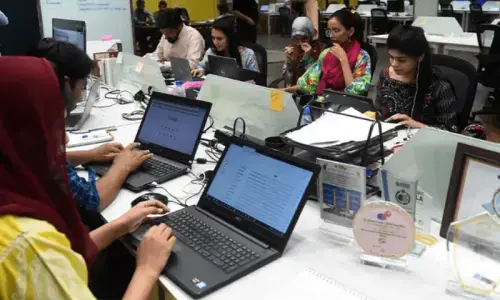
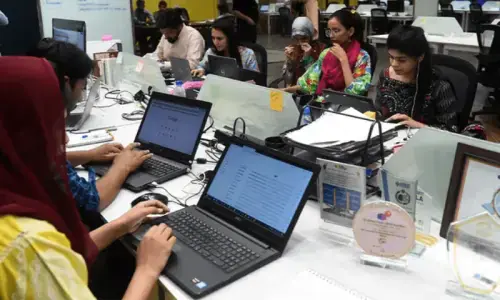
PESHAWAR, April 4: Non-governmental organisations (NGOs) have borne the brunt of growing ‘Talibanisation’ in southern districts of the NWFP as most of them have suspended their activities in the areas, say activists.
Some NGOs working in the districts adjacent to North and South Waziristan have been attacked and others received threats from the local Taliban.
“I received life threats from the local Taliban as they termed my work against Shariat,” a social activist, who runs an advocacy NGO, told Dawn from Tank. He left his hometown and moved to Islamabad five months ago for security reasons.
“No NGO is working at the moment in Tank district and no project, except a sanitation scheme, has been implemented, that too without using the name of the organisation concerned,” he said, requesting anonymity.
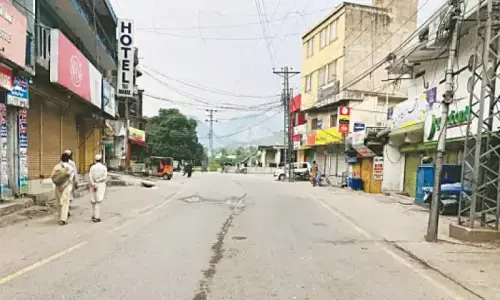
The local Taliban inspired by those in Waziristan have gained influence in Bannu, Lakki Marwat, Dera Ismail Khan and Tank districts recently and the NGOs have limited their activities, specially those relating to advocacy.
“NGOs are not as active as they used to be in the past and everyone is afraid of being kidnapped,” said an NGO worker in Bannu.
Another worker said that there was a “sense of fear” among NGO workers and their activities were very limited.
The Taliban took away a tractor owned by an NGO in October 2006 in Lakki Marwat. Police chased them and recovered the tractor. In July, Razia Ajmal, a lady health visitor, also affiliated with an NGO, was allegedly kidnapped by the Taliban from Tank. She was recovered later.
Recently, the Taliban in Bannu took away a vehicle and a computer from the office a local NGO. They also took away a newly-installed tube-well from Sra Darga Akbar Khan.
Musrrat Bibi, an NGO worker, told Dawn that NGOs had had an image problem but now they were bearing the brunt of growing extremism for “wrong reasons”.
“No one understands in depth the work of an NGO working for solution of problems faced by women in backward areas and the security situation has become worse,” she said.
Her organisation has a large number of women staff and is active in Bannu, Frontier Region of Bannu, Karak, Lower and Upper Dir and Bajaur and Khyber agencies. “We receive threats all the time,” she said.
The organisation had hired local drivers to continue work in Bannu district without upsetting the local Taliban, she said.
NGOs working in the Hazara region are also facing difficulties because of religious groups’ reservations over the presence of foreigners involved in relief activities in the earthquake-affected areas.
Ulema have alleged that some NGOs and foreigners are preaching their own beliefs.
The NGOs had so far received 20 threats only in Mansehra, official sources said.