



 0
0

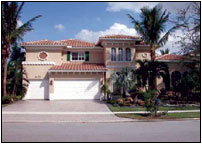 A RACE is on for construction of luxury housing. Coming to participate in such large scale commercial activities are big companies from Dubai, Saudi Arabia, Kuwait and Qatar and from Malaysia, Australia and Singapore in the Far East.
In the 1970’s and early 1980’s, Pakistan-based companies participated in such construction activities in the Gulf, then exploding with the vastly enhanced new oil revenues following the oil shock of 1973 onwards. But such Pakistani companies built mostly factories and housing for workers and the expatriate staff.
The Gulf and other construction companies coming in to Pakistan now want to build luxury housing and swanky offices following the Dubai pattern.
The construction companies from Pakistan that went to Dubai, Saudi Arabia, Iraq etc have now faded out like the Gammon and Macdonald Layton, while the National Construction has shut shop and they hardly figure in the stock exchanges where they played a significant part earlier. National enterprises in this sector are hardly competing with the foreign companies in providing luxury and splendid office accommodation.
Of course, you can’t stop foreign companies from coming in but do we really need so many of those companies and the work they do now? And is there enough money for buying their services? The work they have done so far as in Creek Marina are of standard and the quality is admirable. But what is at issue is the quantity of output they are seeking.
In a developing country like Pakistan, where one-third of the people are living below the poverty line of a dollar a day, should luxury housing for the rich have a high priority? According to the Housing Census of 1998, the housing backlog then stood at 4.30 million and has now risen to 6.19 million.
The census report said to address the backlog and meet the housing production short fall for the next 20 years, the overall housing production has to increase to 500,000 units annually. The report also said the present housing stock is rapidly ageing and estimates suggest that more than 50 per cent stock is over 50 years old.
It is also estimated that 50 per cent urban population lives in slums and squatter settlements. Meeting the backlog in housing is beyond the financial resources of the government. The government should therefore encourage the participation of formal private sector and mobilise non-government resources for a market-based housing finance system.
The House Building Finance Corporation has increased its lending to the low income and middle class house builders and commercial banks are offering long- term loans to affluent house builders at higher interest. But all this touches only a fringe of the problem. And now come the luxury builders who come from abroad and are catering to the demand of the get-rich class which leaves the basic housing problem untouched.
The low and middle income house builders find house building much too expensive now. Cement prices have shot up to Rs270 a bag and in spite of the government making the cement manufacturers agree to Rs260 a bag-- a 15 per cent rise. Steel prices have shot up and are now Rs43000 a tonne after it has risen by Rs6000 in five days from Rs37000 a tonne.
Prices of metal-based building materials have been rising, while wood prices have been going up constantly, even sand and earth cost a great deal and of course all of that began with the sky waltzing price of land beyond the means of most house holders. In such an environment adding half a million housing units for 20 years as the housing census report suggested is a dream unless the government comes up with truly helpful measures and not merely with a liberal policy.
But the official practice if not policy is to have too many taxes on house building materials including on paint which makes house building much too costly in spite of the small tax relief announced earlier.
What is striking about luxury housing is that tit has a great deal of imported inputs including steel frames, glass sheets and other metallic fixtures of which the copper base is very costly. Their maintenance and replacements is also through imports and very costly in a country with a large balance of payments deficit and a large trade deficit. We cannot brush aside such concerns too lightly
In the past, the poor people did not mind staying at `kachchi abadis’ far off from the places of their work as the transportation costs were low and buses were easily available. But now while the wages are low in real terms, the transportation costs are very high and it takes a great deal of time to go to work and then reach back home. They now need homes near their places of work.
Instead two islands are to be developed adjacent to Port Qasim at an ultimate cost of billions of dollars offering the best of houses to be seen anywhere. If that much will cost to prepare the islands for high living, how much would be the maintenance cost and how much of that will be imported materials which will strain our balance of payments. This may be a clear case of living beyond our means.
While foreign companies are to build luxury office towers, our own corporate barons are building their own swanky office towers like the MCB headquarters with its helicopter pads. Some other banks like the Allied Bank and the Faysal have followed suit. So, we will eventually have a profusion of office buildings.
We are also to have a chain of eight star hotels which are to be the ultimate in luxury while the western countries are satisfied with five star hotels.
The Defence Housing Authorities (DHAs) are in the lead in promoting luxury housing in Islamabad, Lahore and Karachi. The defence establishment has let out its name Baharia to the private builders making many people believe that it’s an extension of the naval establishment and eventually becoming disappointed in their dealings with such private builders. DHAs are no longer meant for housing the defence offices. Most of the people now owning and living in defence housing authorities are affluent civilians.
We should first find out the office accommodation available and under construction before adding more luxury spaces. And we need a new housing policy for the low income and middle class householders in the light of the newly enhanced price of land and ever soaring costs of building materials.
But as long as the incoming developers and builders do not borrow heavily from domestic banks we cant have serious objection to what they want to do with their money.
Why can’t our construction industry come up on corporate lines and play a larger role as they did in the 1970s and build for the middle income groups if, initially, not for the low income groups.
The luxury living for a few and squalid living for others may not be acceptable to the frustrated or exasperated masses. We need to create a more equitable society.
A good home in a clean environment can be a significant contribution to reducing crime and delinquencies. We should strive towards a more balanced society instead of one in which the extremes of class distinctions are accentuated.
A good home is a beginning of a clean environment without the kind of revolting surroundings which dominate large parts of our cities and towns. So, let the housing for the low income and the middle class have a higher priority for the government than luxury living for the few rich.




























