0
0

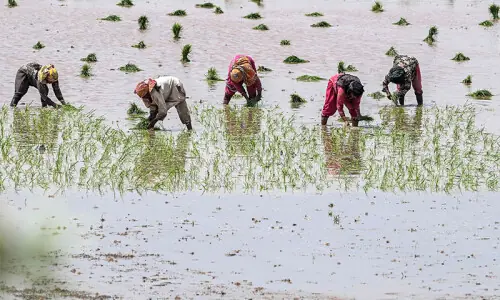
ISLAMABAD, Nov 30: The European Commission and Oxfam GB have launched a three-year project to help prepare people, especially women, to cope with the effects of recurring disasters in the drought and flood-prone areas of Pakistan.
The project “Sustainable livelihood development initiatives in disaster prone areas of Pakistan” aims to reduce poverty, vulnerability and gender imbalance in the disaster prone areas.The main interventions will be in the drought-affected areas of Balochistan and flood-hit coastal belt of Sindh and southern Punjab.
The project will reach more than 40,000 vulnerable people over the next three years. The project will be co-financed by the European Commission and Oxfam GB.
The European Commission will contribute Rs 57 million and Oxfam GB Rs 21.4 million.
Michael Dale, Head of Operations of the European Commission Delegation in Pakistan, while speaking at a ceremony to mark the launching of the project highlighted the commission's social sectors development assistance to Pakistan.
He said the project was based on the commission's approach of poverty reduction through participatory development and support for disadvantaged people, especially women, to meet their basic needs to improve the quality of their lives and to reinforce their development capacities.
He called for additional allocation of resources by the state for the social sectors development and for empowerment of ordinary Pakistanis at the grass-roots level enabling them to make choices and for their voices to be heard.
He stressed the need to mainstream disaster risk reduction in all development programmes for enhanced impact and to particularly target women under such initiatives as resource and change makers.
The recent positive initiative by the government has been the launching of the National Disaster Management Framework, which outlines a holistic approach to disaster management with involvement of civil society and key government institutions.
Country representative of Oxfam GB in Pakistan Farhana Farooqui Stocker said the people in these areas suffered in silence because their misfortunes had often been ignored.
The frequent drought and floods had disturbed life patterns in the affected areas of Balochistan, Sindh and Punjab. People were forced to give up their traditional livelihoods like agriculture and fishing, leaving them poorer and less prepared to face the next disaster.
Ms Stocker observed that people living in those communities needed better social safety nets and a better quality of life to be better prepared to face disasters.