0
0

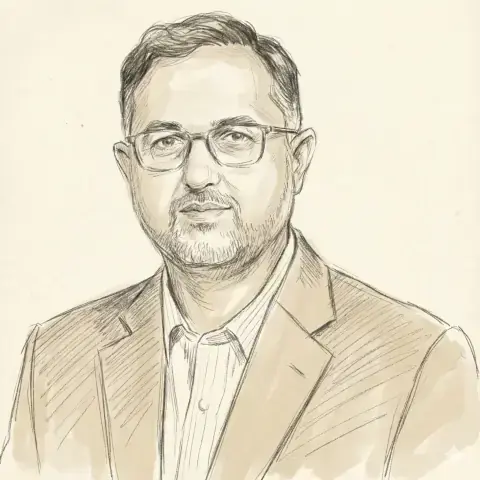
ISLAMABAD, Nov 28: In the death of Prof (Dr) Mehmood Ahmed Chaudhry, remembered by his colleagues, friends and students as the father of health reforms, Pakistan has lost a visionary, health professional, competent manager and reformer.
Dr Chaudhry died in Lahore on Tuesday morning at the age of 70.
He suffered a massive heart attack last week and was admitted to the Punjab Institute of Cardiology.
Although, the professor had unmatched successes in the field of surgery and health management, still his words in one of his last interviews with a magazine said it all. “Time was very short for me to fulfil my ambitions and desires”, he said.
Born in Toba Tek Singh on October 13, 1936, Dr Chaudhry chose to become a doctor out of his love for his mother. A graduate of Nishter Medical College, Multan, the professor was known for his versatile personality. Although, people knew him as a specialist in the fields of surgery and health management, he was also quite adept in art, literature, poetry, architecture, economy, and politics.
He had a flare for writing. He was one of those rare people who have the faculty of acquiring knowledge almost without effort and of keeping it ready for use on all occasions.
His passion for research, dedication to his students, and willingness to help were the common characteristics that his colleagues, friends and students recall.
Prof Chaudhry was one of the few doctors who had preferred to work in rural areas at the start of his career. This gave him an excellent understanding of the basic requirements of the downtrodden people at the grassroots level.
A reflection of this aspect was visible in the health reforms package that he gifted to the Punjab.
The basic theme of the reforms was improving health facilities and working conditions of the junior doctors in rural areas by making Tehsil headquarters hospitals as centres of specialisation.
He used to say that “our hard luck is that we neglected prevention and primary care. We can’t create an impact no matter how much we invest in tertiary care hospitals as long as we continue neglecting the grassroots healthcare system”.
The professor, a Fellow of Royal College of Surgeons Edinburgh and London and FCPS, played a vital role in the formation and advancement of institutions.
He was instrumental in setting up of Sheikh Zayed Hospital, Lahore; evolution of Pakistan Institute of Medical Sciences Islamabad and establishment of the first public sector health university — the University of Health Sciences, Lahore. Even during his two-and-a-half years as provincial health minister, he spent his energies on improving and upgradation of primary and secondary healthcare centres.
As a minister he was also a strong critic of the malpractices in the medical community and had even coined the term “merchant doctors” for the unscrupulous element engaged in minting money in the name of serving humanity.
University of Health Sciences had to meet stiff opposition during its infancy from those having vested interests. However, relentless efforts by the professor succeeded in putting the university on solid foundations. The presence of Prof Chaudhry was so strong for the opponents of the university that hardly few hours after his death they were talking about the viability of the varsity.
He had taught surgery for 12 years at international leading UK institutions like Oxford and Guy’s Hospital. A recipient of Sitara-i-Imtiaz and Hilal-i-Imtiaz, he had done research in breast cancer and hepato-biliary surgery.