0
0

ISLAMABAD, Oct 15: Though agriculture plays a starring role as the most important sector for employment and income generation in Pakistan, foreign aid for agriculture and rural development has continued to decline.
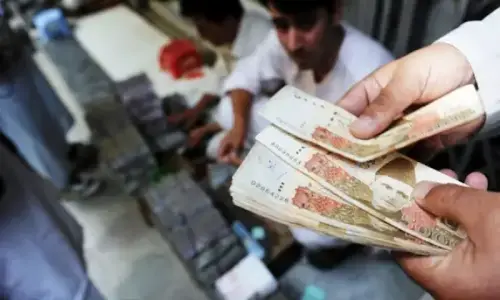
Only three projects have been listed as ongoing in the Public Sector Development Programme for 2006-07, which received foreign aid, whereas for new projects no foreign aid has been committed. The three projects are: Chaghi water and agricultural development programme; livestock disease control or eradication of rinderpest; and agricultural business development and diversification project which is being assisted by the Asian Development Bank. The total foreign aid for these projects in 2005-06 was Rs907.5 million.
Foreign aid for agriculture and rural development fell to less than $5 billion in the late 1990s from $9 billion in early 1980s, according to statistics released by the UN Food and Agriculture Organization (FAO) on the occasion of World Food Day being observed on October 16.
Only investment in agriculture together with support for education and health would turn the situation around. The bulk of that investment would have to come from the private sector, with public investment playing a crucial role, especially in view of its facilitating and stimulating effect on private investment, the FAO said.
Underlining the importance of foreign aid in agriculture, FAO Director-General Jacques Diouf said that the public sector in many parts of the developing world had been slow to respond to the changes that globalisation had brought to markets. Investment in building the capacity of governments to help their small farmers and to encourage private investors was money well spent.
Increasing the volume of public investment in agriculture was of absolute necessity and it was crucial to make such assistance more effective.
The FAO had helped 165 member countries to obtain funding for almost 1,600 agricultural and rural investment programmes and projects. That represented funding commitments of over $80 billion, said Dr Diouf in his message on World Food Day.
The FAO report said that most of the world’s farmers were small-scale farmers. As a group, they were the biggest investors in agriculture. They also tended to have inadequate or precarious access to food themselves. If they could make a profit with their farming, they could feed their families throughout the year and reinvest in their farms by purchasing fertilizer, better quality seed and basic equipment.
Small producers faced many obstacles beyond their control: lack of credit, insecure land tenure, poor transport, low prices and poorly developed business relations with agribusinesses to say nothing of natural factors such as drought, flood, pests and disease.
The report said a new model for cooperation between the public and private sectors in rural development was evolving. The model included new ways to bring together producers and agribusiness; establish and enforce grades and standards; improve the investment climate for agriculture; and provide essential public goods such as rural infrastructure.