0
0

Carnage at Indian mosque
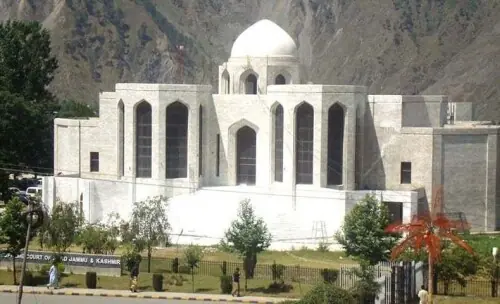
WHAT some observers of the Indian scene had dreaded for long finally came to pass on Friday: terrorists struck at a mosque, killing at least 37 people and injuring over 100. Hidden in a bicycle, the bomb outside the mosque was one of three to rock Malegaon, the other two going off in a Muslim cemetery and a Muslim neighbourhood. The incidents come in the wake of the Mumbai train blasts and the controversy surrounding the national song Vande Mataram, which has aroused communal passions throughout India, especially because the BJP has ordered its compulsory singing in states under its control. The blasts occurred in Maharashtra, where Shiv Sena, known for its anti-Muslim philosophy, has been in decline and looking for an opportunity to stage a comeback. In July it orchestrated violent protests, following the alleged desecration of a monument to Meenatai Thackeray, the founder’s wife. The party was also responsible for Hindu-Muslim riots that rocked Mumbai in the wake of the stock exchange blasts in 1993. Now the Mumbai train explosions have come in handy for Shiv Sena and other Hindu right-wing parties to revive their sagging fortunes.
Communalism continues to pose a challenge to secularism in India and is causing anxiety among the Muslims particularly in areas seen as communal flashpoints. Nearly 10 years after the Babri mosque’s destruction, which led to countrywide riots causing the death of thousands of Muslims, Gujarat witnessed one of India’s worst massacres following the burning of a train in Godhra for which Muslims were promptly blamed. Judicial findings later confirmed that Muslims were not responsible for the fire. Still, what the world saw was a state government-sponsored pogrom for which sections of the Indian press and international observers, including European Union diplomats who visited the site of the carnage, held BJP Chief Minister Narendra Modi personally responsible. Yet the tragedy was that Mr Modi won a landslide victory in the next elections. The possibility that the Mumbai blasts could be utilised as a pretext for unleashing a new wave of communal violence was mentioned by Indian Prime Minister Manmohan Singh at a recent high-level meeting in New Delhi, where he alerted the state administrations to take necessary precautions. Bombings in India have often soured its relations with Pakistan.
The blast at Malegaon may not provide an apt background for the expected meeting in Havana later this month between President Pervez Musharraf and Mr Manmohan Singh, but it is unlikely to cast a shadow over the talks. For years, everyone in the Indian government has been advising Pakistan to “do more”. The time has come for the two leaders to note that an act of terror in one country strengthens the hands of extremists and fundamentalists in the other. In this country there is no dearth of fanatics who exploit religion for brainwashing the youth to use them as instruments of terror against fellow citizens. It would be a pity if such elements in both countries were allowed to sabotage the peace process. Already, the détente has virtually come to a halt. The task before the two leaders in Havana should be to focus on the revival of the peace process and not let extremists on either side endanger what so far has been a commendable process of normalisation.
Fate of the women’s bill
THE parliamentary wrangle over the protection of women bill has cast the government in a very poor light. It also reflects the misogynist mindset of our politicians which determines their national priorities. Balochistan is in flames. Peace in Waziristan is still precarious. Islamabad’s dialogue with India is on tenterhooks. But all this has receded into the background. What appears to have emerged as a major issue of national importance that is agitating the minds of our political leaders, especially those who claim to be the custodians of our faith, is the fear that the amendments in the Hudood laws and the PPC might give women the justice they have been denied since 1979. So strong is the aversion of some religious parties on this score that they have even threatened to resign if the bill is adopted. With many of the ruling party MNAs having joined hands with the opposition to stall the amendment bill on Thursday, the government felt intimidated by the resignation threat. Hence its move towards a consensus.
Will the bill be introduced on Monday as promised? And in what form? The ideal situation would have been to repeal the Hudood Ordinances and be done with it. What was enforced in 1979 was a man-made law by a military dictator without any legal, constitutional, legislative or religious sanction. In the 27 years that these laws have been in force they have brought untold sufferings to women — mostly the poor and the weak. If for some reason the government does not feel strong enough to confront the obscurantists among the ulema and take a bold step, it should proceed with the amendments that have the approval of the Islamic Ideology Council and many Islamic scholars as they neutralise some of the controversial provisions that have meant grave injustice for women. A lot of work has been done on the amendments by lawyers and ulema — the last input having come from the parliamentary select committee — to ensure that no one raises any objections to its various clauses. If all this is ignored, one wonders what the government’s own response will be. Obviously, drastic changes designed to water down the amendments will make the bill no more than an eyewash.
After the rains in Sindh
FRIDAY’S heavy rains in Hyderabad and parts of Sindh wreaked their usual havoc on an already dilapidated infrastructure as 10 people were reported dead and thousands marooned. This prompted authorities to declare an emergency and call in troops to assist in rescue operations which proved to be a wise move. But this is not to suggest that the worst is over. Images in the media showed the destruction that 200 millimetres of rains caused in the areas with people wading through knee-deep filthy water or being transported in boats. Many families were evacuated to relief camps set up in government schools but others did not have that option and simply shifted to their roofs fearing for their safety as water as high as eight feet flooded the roads. Authorities need to identify and cater to poor peoples’ needs and move fast to ensure their safety. A proper assessment of the scenario post-rains as well as a comprehensive strategy on peoples’ rehabilitation is critical. Those in relief camps must not be left to fend for themselves once the situation normalises.
We are all too familiar with the problems heavy rains pose, especially for peoples’ health and lives. Cleaning the cities and towns affected by Friday’s rains should be a priority to reduce the danger of an outbreak of water-borne diseases that inevitably occur in the wake of a downpour. People in Sindh have suffered bouts of gastroenteritis and it would be tragic if Hyderabad and other places are plagued by this affliction because authorities did not alert residents to the precautions they should observe. Telling people to boil water, for example, is one way they can protect themselves. It is imperative that this message makes it to villages where the state of public healthcare is virtually non-existent.
Nawab Akbar Bugti as I knew him
“At once insanely proud and filled with hatred, omniscient and doubting everything, cold and violently passionate, contemptuous and self abasing, tormented and detached, surrounded by devoted followers... wholly isolated, he is the most tragic of the great writers, a desperate old man, beyond human aid, wandering self blinded at Colonus.”
— Isaiah Berlin on the death of Count Leo Tolstoy
THE above word picture provides a near fit for the life, times and death of Nawab Akbar Khan Bugti. Tolstoy, who, towards end of his life, almost acquired the persona of a world redeemer or near prophet, died in tragic circumstances at a remote Russian railway station, Astopovo having fled his family and huge estate. Bugti died in a cave in the inaccessible Kohlu hills.
Like Tolstoy, Bugti too was insanely proud, violently passionate and contemptuous. Given an audience — particularly of politicians and journalists — his sarcasm could be like a rapier thrust between the ribs. When we visited him as a parliamentary group in March, last year, he made hurtful ethnic remarks to Senator Nisar Memon. He was also pleased to declare the entire Parliament as a bunch of eunuchs. When reminded that his own party members sat in parliament, he thought the same of them; it didn’t possibly strike him that over 20 per cent of Parliament consisted of lady members. These remarks were never to be taken seriously and as far as I was concerned, it provided more for amusement than umbrage. It was like a headmaster talking down to his students.
We are well aware of Bugti’s victims and cruelties which was the convex side of his multi-faceted personality; but there was also a concave side which was generous, very caring and affectionate towards people he liked, including his loyal followers.
I considered the Nawab an elder friend. The thing we had in common was books. He was a voracious reader, sitting cross-legged on a carpet, he often read till late in night. He was my ardent supporter at election time. I needed the Sikh vote of his area. He would snap his fingers and order one of his acolytes to ensure that each and every vote was delivered to me. Never did he ask me to join his party as a quid pro quo or demand anything in return.
I called on the Nawab during the general election of February 1997. It was a nice balmy evening and after the usual sumptuous Baloch dinner — I may add the Nawab was a vegetarian — he invited me to sit in the garden to talk books. Sometime earlier two of his grandsons had been killed by his political opponents. He was gaunt, but did not show his grief. Towards the end of our conversation — and by now it might be around 1 am — I had a glimpse of the vengeance in store. Somewhat innocently I asked him “Sir, if I give you a magic wand what would you desire?” He answered, “I would wish everyone dead, yes, each and everyone dead.” I said, “For that you don’t need a magic stick, two or three hydrogen bombs will do?” “Oh, no”, he replied, “With hydrogen bombs there will be escapees. I don’t want any escapees.”
After the murder of Sardar Domki’s sons — his grandsons — he rarely left Dera Bugti, an isolated hamlet in the middle of nowhere. Many people came from the four corners seeking his audience, which was readily granted. But by now in his grief and the rage that was swelling within him, he expelled all the Bugti sub-tribes which were inimical to him or not amenable to his command. Thousands were ordered to leave their homes to cross over to Punjab, as a punishment. I was told the women folk of those ordered to leave wailed outside the gates of his fort for days begging for mercy out to no avail.
Rage and revenge, I imagine must have occupied many hours of his days and nights. It is in this context that his political demands took final shape. Islamabad was yet another adversary that had to be taken care of. The extremism that was always within him now acquired a steel edge. Compromises were no more than shabby bits of paper. In this megalomania he decided to take on the state with heavy weapons allegedly supplied by our neighbours. His private army of between two and three thousand men was fanatically devoted to him.
In his last years he researched widely the pre-Islamic history of Balochistan ending with the Sassanian period (651 AD) which was part of the Zoroastrian Persian empire. In his own rugged area he claimed to have found Zoroastrian altars. In his quest to learn more about this religion, he asked me to send him books. I sent him an autographed copy of Prof. R.C. Zehner’s ‘Zurvan: a Zoroastrian Dilemma’, which I found unreadable because of its dry, heavy-reading content. When I recovered the book two or three years later and asked him if he had read it, he replied with relish that he had. An examination of the book revealed heavy pencil underlining. Among novelists one of his favourites was Salman Rushdie — he much enjoyed reading ‘The Moors’ Last Sigh’. He read voraciously poetry and biographies. Many years back I had sent him the poems of Sappho. As a free thinker, he enjoyed the mental space provided by like-minded writers.
It is curious that notwithstanding his intellectual and aesthetic fibre, he had a streak of ruthless cruelty. But if his punishments were severe, it has to be understood within the cultural moorings of his society.
Pakistan’s largest gas field Sui is located in his fiefdom. The Sui field has saved Pakistan billions of dollars. He believed over the years Islamabad had short-changed him and the Province on royalties. During our last meeting in Dera Bugti, our group asked him what increase in royalties was his demand, he replied, “You have entered my house and stolen my goods, now you want me to tell you what share I require from my looted goods?” Later in the meeting, for some reason or the other, he turned to me and said, “Some people say I am a separatist?” I replied, “Sir, I don’t think you are one”. And then came the last word, “I have no objection to being called a separatist.”
With this remark we stood on opposite sides. A citizen’s primary duty is loyalty to the state. I instinctively felt this was the denouement. Hope flickered for a moment when he said that he held Ch. Shujaat Hussain and Syed Mushahid Hussain in good esteem, a rare remark from the Nawab and playfully did he roll the word “Syed”.
Akbar Bugti was a charismatic figure, over six feet tall with a shock of white mane, a trim white beard and a Balochi drape to match. He would cut an imposing figure walking with a long staff in hand, looking every inch like Plato’s Philosopher — King.
Bugti’s vision was that of an autonomous Balochistan, something akin to Mujib’s six points; accommodating his demands could have been the subject of a political process but compromise was not his forte. The balance was tipped by acts of terrorism, particularly after the President Musharraf’s helicopter was fired at in Kohlu.
The army did show a great deal of forbearance and patience. This I say from personal experience when we visited Dera Bugti in March last year. Bugti had clearly over-reached himself. Hubris inevitably leads to nemesis. All stakeholders in this political brawl have come out the losers in the end. To die being crushed under a rock deep inside a cave must have been a horrible end, for Bugti and his followers, and the six army men who too were killed in the underground blast. Bugti was a grand feudal.
There will be other feudal grandees to follow in his footsteps, but the future does not belong to them. The Baloch insurgency will soon peter out as did the Sikh insurgency in Indian Punjab after the elimination of Bhindranwale.
In the end this proud, handsome Baloch chieftain appears as a tragic figure “a desperate old man totally isolated beyond human aid, wandering self-blinded at Colonus”.
The writer is an MNA.
murbr@isb.paknet.com.pk
Our big fat world
THE world is round — and so are a growing number of its inhabitants.
Amid all the attention Americans’ expanding waistlines are getting in the United States, another trend has gone less noticed: According to the World Health Organization, the rest of the world is packing on pounds almost as fast.
More than half of adults in Australia, Saudi Arabia and Mexico are overweight. In China, one in five adults is heavy. Even sub-Saharan Africa, where most of the world’s hungry live, is seeing an increase in obesity, especially in urban areas. Altogether there are more than a billion overweight people around the globe, compared to 800 million who are malnourished.
In many ways, of course, this is progress. More people around the world are benefiting from globalisation’s bounty and aren’t as hungry as their parents were. Since 1990, the global rate of malnutrition has declined an average of 1.7 per cent a year. Especially in countries such as China and India, incomes are rising, food prices are falling and more people can afford more “Westernised” (and fattening) diets.
—Los Angeles Times