New development projects
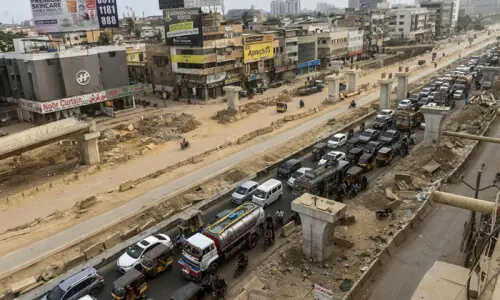
THE Executive Committee of the National Economic Council (Ecnec) has approved 30 development projects estimated to cost Rs130 billion. The first priority has been given to infrastructure development with a hefty share of Rs81.7 billion for 15 projects, 11 of which are for water resource development and three for the energy sector. The social sector has been allocated the second-highest amount — Rs44.2 billion for 12 schemes. By increasing public spending on the two priority sectors and, hopefully, putting a strong emphasis on achieving the stated objectives, one may look forward to the creation of the right environment for sustained social and economic development. Public spending on education, currently stagnant at 2.1 per cent of GDP, is much lower than the outlays of other countries in the region — 4.1 per cent in India and 3.4 per cent in Nepal. The situation in the health and nutrition sector has worsened with government expenditure dropping from 0.59 per cent of GDP in 2002-03 to 0.51 per cent in 2005-06. Unfortunately, because of the absence of the concerned minister at the Ecnec meeting, five schemes in the health sector costing Rs5.1 billion had to be deferred.
Apart from funding of the social sector at the required level, the timely completion of projects without cost overruns is also a critical issue. The Ecnec approvals include a hefty amount of Rs21 billion for eight ongoing projects on account of cost escalation attributed to faulty planning, designing problems and delays in implementation. These include the second flood protection project, RBOD extension, Taunsa Barrage emergency rehabilitation and modernisation project, Punjab Barrage and the water supply scheme in Khyber Agency. At a recent meeting presided over by the minister for water and power, it was also revealed that three major water sector projects had met a similar fate. Progress on the Rs64 billion Mangla Dam raising project is much behind schedule. The cost of the Katchhi canal project has more than doubled — from Rs31.2 billion to over Rs70 billion — because of lack of proper planning and faulty procedural codes. The security problem in Balochistan has delayed the completion of the Rs13 billion Gomal Zam Dam by more than two years. The water sector programme, so vital for boosting agricultural production, appears to be worst hit.
Of the 30 projects approved by Ecnec, eight are national projects. Of the rest, three will be located in Azad Kashmir, two in Balochistan, four in the NWFP, five in Sindh and eight in Punjab. How much these schemes will help in removing disparities in incomes between various provinces, and improving household incomes in less developed areas in each province, cannot yet be assessed but the government needs to review its present development policy and allocation priorities that have worsened the disparities in individual and regional incomes. The situation has led to provincial disharmony and differences. The foreign exchange component of the approved projects will be nearly one-third of the total cost. How much of it will be in the form of foreign loans is not known, but foreign-funded projects suffer from the hassles involved in firming up pledges into firm commitments and disbursement of funds. The problem needs to be tackled. On its part the government needs to appoint project directors with professional expertise and not the favoured ones to manage things efficiently. All development programmes, policies and projects should be closely monitored to ensure their speedy and efficient implementation according to a time schedule in each case.
Up against sardari system
THE sardari system is a medieval abomination whose continuation in the 21st century has done incalculable harm to Balochistan. Its Bugti-specific abolition on Thursday by the Bugti Qaumi Jirga should focus attention on this anachronism. Among other factors, the sardari system, revolving round the absolute powers of hereditary tribal chieftains — even the power of life and death over their subjects — has been a major cause of Balochistan’s socio-economic backwardness. While abolishing the ‘nawabi’ system in the Bugti tribe, the Bugti Qaumi Jirga announced a number of other decisions, including the formation of conciliation committees to end feuds among various tribes. Later, some Baloch sardars criticised the Quetta jirga for its decision and challenged its right to do so. However, the mere fact that some sardars should have rallied to the defence of this retrogressive system makes one wonder whether they have a vested interest in its continuation. The horrors perpetrated by sardars on their own ‘dissidents’ is a story unto itself. Some sardars maintain private jails, and the punishment for disobedience can range from eviction from land to death. A foreign journal quotes a sardar as saying, “What is better than seeing your enemies driven before you and then taking their women to bed?”
The reason why the sardars find themselves well entrenched in Baloch society is the neglect which Balochistan has suffered at the hands of successive federal governments. Sardari, along with feudalism in other parts of Pakistan, should have been abolished long ago. That this was not done has cost the province and the country dearly. Z.A. Bhutto abolished the sardari system following the insurgency in the wake of his dismissal of the provincial government, but it was later restored. That helped the sardars reassert their power, which they guard jealously. Ironically, these slave-drivers claim to fight for such noble causes as justice and freedom, because Balochistan hardly has any middle class which could take up Baloch causes with sincerity. Those who took the decision in Quetta on Thursday are no doubt on Nawab Akbar Bugti’s wrong side. For that reason, it is obvious the nawab will use every trick up his sleeve to counter what to him may appear a government-organised drama by his enemies.
Why this discrimination?
WHATEVER claims might be made about women in Pakistan enjoying equal rights with men under the Constitution, the fact is that they suffer gross discrimination, not just socially but even under the law. One such example — there are numerous others and the Hudood Ordinances being the most blatant ones — is the Pakistan Citizenship Act. Under this law, a Pakistani man marrying a foreign woman can obtain nationality for his spouse just for the asking. But a woman marrying a foreigner is not entitled to the same right. Why? All kinds of reasons have been advanced by governments that have no desire to correct this gender bias. It is said that foreign men can be security risks and since India (from where most foreign spouses come) does not grant similar rights, the principle of reciprocity obliges Pakistan to follow suit. Other governments, such as the PPP when it was in office, used the discretionary powers granted to it under the Act to rule in favour of women with foreign spouses. But the law has not been changed so far and a bill moved by a woman MP of the ruling PML was rejected by the NA’s standing committee.
This reflects a retrogressive mindset typical of a patriarchal society. If foreign spouses can be security risks, why are the spouses of women singled out as being dangerous and not vice versa? Obviously the law is outdated because not many women married foreigners in the past. But now the situation has changed and those who make policies in Islamabad must understand that discriminatory laws such as the Citizenship Act need to be amended in keeping with the compulsions of gender equality. The National Commission on the Status of Women should also review all laws and impress on the rulers that the state must be proactive on women’s rights and amend the laws that are discriminatory.
Rights & justice must go together
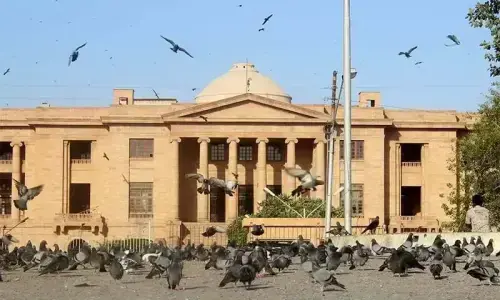
TO commemorate its 50th anniversary, the Supreme Court of Pakistan held an international judicial conference on a befitting theme “Justice for all” in Islamabad recently. The conference theme gives us an opportunity to reflect on justice, one of the most important pillars of civil society.
What is justice — is it synonymous with law? What kind of justice are we talking about when we speak of “justice for all” — merely legal justice or economic, social and political justice as well? Last but not least, whose responsibility is it to provide justice — the judiciary alone or the legislative and executive branches of government as well?
This article will seek answers to these questions from the interdisciplinary perspective of Pakistani law and economic policies. The purpose is to highlight the need for economic justice and the role that law and legal institutions have played and can further play in turning this aspiration into reality.
Justice in general parlance denotes the quality of being just or fair. It is different from law. Laws are not necessarily just or fair. Laws passed by illegitimate governments are often unjust (sometimes laws passed by legitimate governments are also unjust, e.g. the 18th century slavery laws in the United States). Laws that protect property rights without adequate safeguards for the poor are also considered unjust. Furthermore, lack of access to courts for whatever reason, especially by the poor, is unfair.
In order to effectuate justice, it is important to take the abstract concept to a concrete level. This is easily done through legal intervention. In legal parlance, justice connotes the responsibility that a country or its government has towards a person individually and society as a whole. Accordingly, the basic law (constitution) provides a judicial system for discharging this responsibility. However, the judicial system is deferential to the law.
The judicial system deals merely with the administration of law and is intended to ensure due process, which provides everyone a just and fair opportunity of protecting their legal rights. In other words, in judicial terms, the concept of justice is, generally speaking, procedural in nature. This procedural power to dispense justice is, for example, reflected in the Pakistani Constitution, which empowers the Supreme Court to (i) transfer cases if it considers it expedient to do so in the interest of justice (Article 186A), and (ii) issue such directions, orders or decrees as may be necessary for doing complete justice in any case or matter pending before it, including an order for the purpose of securing the attendance of any person or the discovery or production of any document (Article 187).
The judiciary does, however, resort to the principle of natural justice (under which moral standards and values override manifestly unjust legal norms) sometimes, even though rarely, to provide equitable relief as well. The judiciary, therefore, remains charged with the primary responsibility to pass just laws and the executive remains obligated in the second place to ensure that no injustice is done in the implementation and enforcement of the same.
The concept of justice has historical roots in Pakistan. It is ingrained in the Objectives Resolution whereunder the Constituent Assembly resolved to frame a constitution for the sovereign independent state of Pakistan “[w]herein the principles of democracy, freedom, equality, tolerance and social justice as enunciated by Islam shall be fully observed [and w]herein shall be guaranteed fundamental rights including equality of status, of opportunity and before law, social, economic and political justice, and freedom of thought, expression, belief, faith, worship and association, subject to law and public morality.”
Accordingly, the 1973 Constitution, provides for the promotion of social justice: “The state shall (a) promote, with special care, the educational and economic interests of backward classes or areas; (b) remove illiteracy and provide free and compulsory secondary education within the minimum possible period; (c) make technical and professional education generally available and higher education equally accessible to all on the basis of merit; (d) ensure inexpensive and expeditious justice” (Art. 37). The state obligation to ensure inexpensive and expeditious justice has been further reinforced by the enforcement of Shariah Act, 1991: “... it is one of the fundamental obligations of the Islamic state to provide inexpensive and speedy justice to people through an independent Islamic system of justice without any discrimination” (preamble).
The constitutional and legal obligation to provide legal, social and economic justice is being met partially through the implementation of various government policies. These policies have in large part been inspired by international monetary and financial agencies.
While carrying out economic reforms under the International Monetary Fund (IMF) structural adjustment programme from 2001-2003, the government, with the help of the IMF and the World Bank, developed the Poverty Reduction Strategy Paper (PRSP), wherein it broadened the definition of social and poverty-related spending to include law and order and administration of justice, and sought to increase the range of social and poverty-related expenditures to between four to five per cent of the GDP.
The PRSP recognised that poverty cannot be eliminated unless the causes of poverty are addressed. It identified key reasons for poverty and to to combat it, the PRSP suggested the need to improve access to basic needs such as primary education, primary healthcare, drinking water, and access to justice.
The PRSP also suggested improved governance and devolution, including improved access to justice at the local level, as a means of delivering better development results and ensuring social and economic justice. Specifically with regard to access to justice, it stated:
“Improved access to justice is an absolutely necessary complement to devolution that is directly linked to poverty reduction ... The government recognises that judicial, legal and police reforms are essential to establish the rule of law and enforcement of contracts that will stimulate economic growth and encourage private investment — both local and foreign. The basic problems of judicial administration in Pakistan relate to case management and delay reduction, automation of courts, human resources and its development, infrastructure inadequacy, and redressal of small causes. The government in collaboration with the judiciary and the provincial governments is implementing the Access to Justice Programme (AJP) to address issues associated with administration of expeditious justice.”
The AJP has been undertaken by the government with the support of the Asian Development Bank (ADB) and is aimed at strengthening the rule of law and enhancing the transparency of and accessibility to the legal system. Its mission is to modernise the court system at all levels and strengthen the capacity, effectiveness, and accountability of law enforcement agencies. The government has established a special fund entitled “Access to Justice Development Fund” for this purpose.
The government has consequently been trying to improve access to meeting basic needs and strengthen the country’s judicial system. It has also carried out police reforms to ensure maintenance of law and order and dispense speedy justice, established criminal justice coordination committees at the district level and established small cause courts to deal with judicial delay. These measures are intended to provide the poor and the illiterate more effective recourse to redress grievances and more open access to justice in their own communities.
While pursuing its liberal economic reform programme, the government appears to be conscious of the need to maintain a balance between its market-driven policies and its constitutional obligation to promote social justice. However, despite all good intentions, the realisation of legal, social, and economic justice remains elusive. Access to justice remains unequal today and poverty is not decreasing as it should. There are a host of reasons for this. Often, a lot more is said than done — the government is usually quick to adopt donor-driven reform agendas but slow to implement them. The government lacks either the sincere commitment or capacity (both human and financial) to carry out reforms meaningfully.
Be that as it may, it is imperative for civil society to ensure that the government does not falter in the implementation of its proclaimed policies, especially now that international supervision, which prompted the said policies in the first place, has ended. The real test lies in whether or not the government will continue to put its money where its mouth is by making the necessary budgetary allocations each year for the desired legal and judicial reforms.
The provision of justice is the shared responsibility of all the organs of the state (the legislature, the executive and the judiciary) and not only the judiciary. The legislature has to ensure the passage of just and fair laws, the executive has to ensure that all its business is transacted justly and fairly, and last, but not least, the judiciary has to ensure inexpensive remedy and speedy relief to people without any discrimination.
Since poverty is the most notable factor which perpetuates unjustness and unfairness in society, particular effort needs to be made to progressively enforce fundamental economic rights granted by the Constitution.
The writer is a former chairman of the Securities and Exchange Commission of Pakistan.